Lord Shree Ganesha – The First Worshipped Deity and Remover of Obstacles: Complete Story and Divine Glory
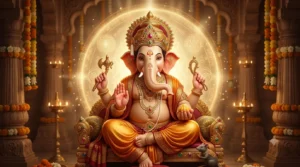
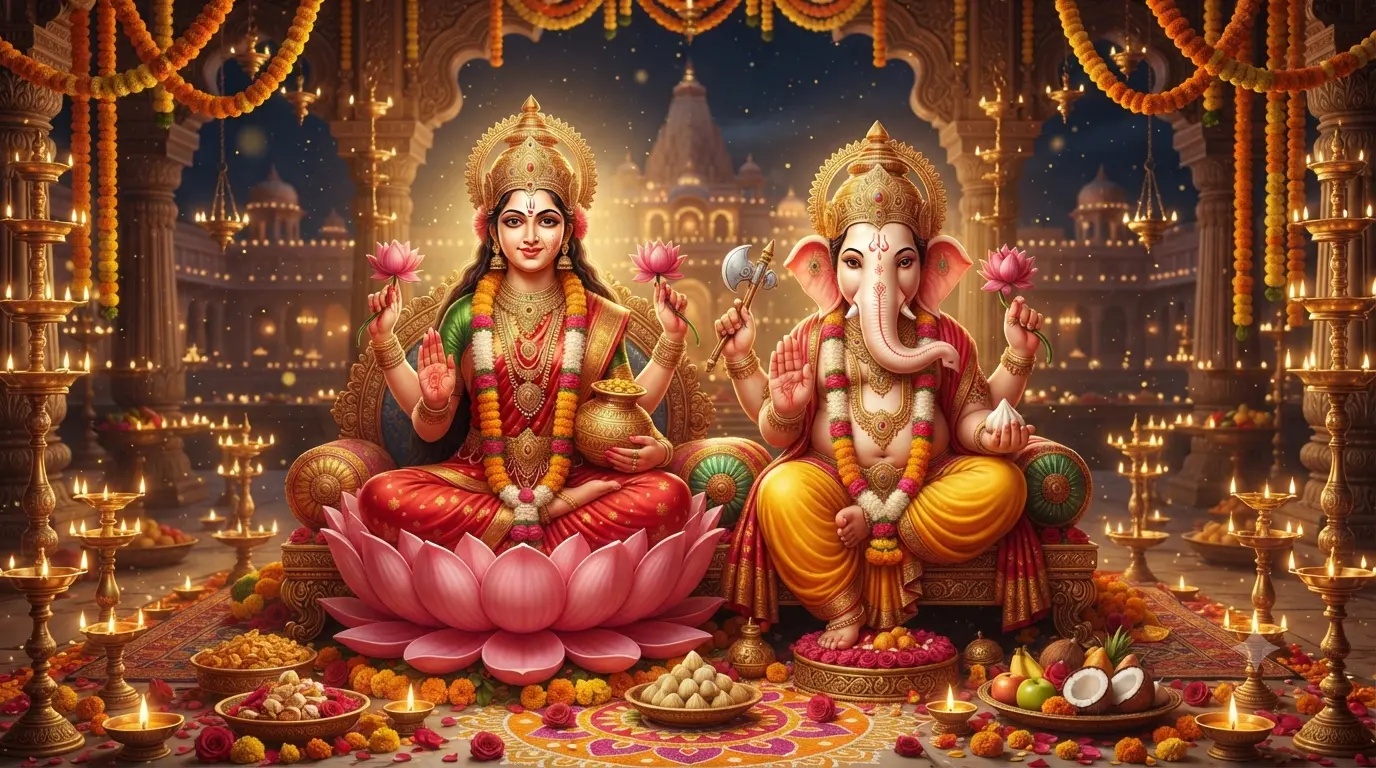
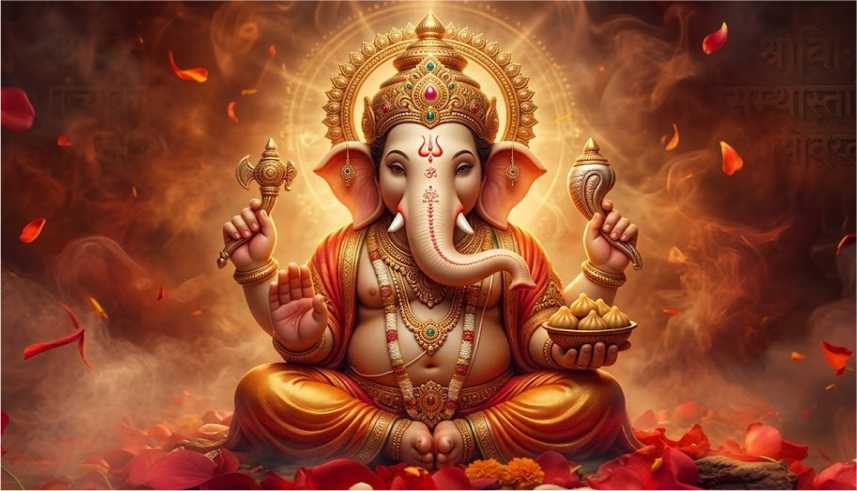
Lord Shree Ganesha (Lord Ganesha) is one of the most beloved and widely worshipped deities in Hinduism. According to the teachings of Bhakti Margdarshan, the foundation of devotion lies in faith in God and following the spiritual path. Sanatan Dharma encompasses many traditions and forms of worship, in which devotees worship their chosen deities. However, whenever an auspicious occasion or new undertaking begins, the first deity remembered and worshipped is Ganpati Bappa. His cheerful elephant-headed appearance, round body, modak in his hand, and mouse vehicle hold a special place in the hearts of devotees.
The Story of Lord Ganesha’s Birth and How He Became the First Worshipped Deity
The title “First Worshipped Deity” refers to the deity who is worshipped before all others. Lord Ganesha received this special position through the blessing of his father, Lord Shiva. Whenever devotees hear the name “Ganpati Bappa,” they imagine a lovable elephant-headed deity enjoying modaks while seated on his mouse vehicle. However, several fascinating and meaningful stories are associated with his divine appearance.
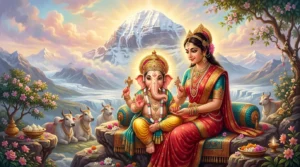
Lord Ganesha is traditionally known by the name Vinayaka, which signifies wisdom and excellent leadership. He is known by many names, and according to popular religious stories, his elephant head was not his original form. According to Hindu mythology, Goddess Parvati created a young boy using the sacred paste and clay from her body and brought him to life. She instructed him to guard the entrance and not allow anyone inside while Lord Shiva was away.
Some time later, when Lord Shiva returned to Mount Kailash, Ganesha stopped him from entering because he was following his mother’s instructions. At that moment, Lord Shiva did not know that the young boy was his own son. Enraged by being stopped, he severed Vinayaka’s head.
When Goddess Parvati witnessed what had happened, she became extremely angry. She threatened to destroy the entire universe unless her son was brought back to life. To calm her anger and fulfil her wish, Lord Shiva brought the head of an elephant and attached it to Ganesha’s body. In Sanskrit, an elephant is called “Gaja,” which is why Lord Ganesha also became known as “Gajanan.”
Goddess Parvati was worried that people might make fun of her son’s unusual appearance. To reassure her, Lord Shiva blessed Ganesha with the special position of being worshipped before every other deity. The other gods also bestowed numerous blessings upon him.
According to another popular story, a competition was organised among the gods to see who could complete a journey around the Earth first. All the deities set out on their respective vehicles. However, Lord Ganesha simply circumambulated his parents and explained, “For me, my entire world is my parents.” His wisdom, devotion, and understanding impressed all the gods, who then granted him the honour of being the first worshipped deity.
The name “Ganesha” means “Lord of the Ganas,” while “Ganapati” also refers to the master or leader of the Ganas. Another famous name of Lord Ganesha is “Ekadanta,” meaning the one with a single tusk. Two popular stories explain the origin of this name.
The first story is associated with Sage Ved Vyasa. When he decided to compose the Mahabharata, he requested Lord Ganesha to write it down. Ganesha agreed on the condition that Sage Ved Vyasa would narrate the entire epic continuously without stopping. In response, Ved Vyasa placed his own condition that Ganesha must understand every verse before writing it down.
Lord Ganesha was extremely intelligent and continued writing at great speed. However, when his writing instrument broke, he broke off one of his own tusks and used it as a pen to continue writing the Mahabharata. This is why he became known as “Ekadanta.”
The second story is associated with Lord Parashurama. Once, Parashurama arrived at Mount Kailash to meet Lord Shiva, but Ganesha stopped him because his parents were resting. Angered by this, Parashurama challenged Ganesha to a battle. He was carrying the axe that Lord Shiva had given him. Ganesha respected his father’s divine weapon and did not resist it. Parashurama struck one of his tusks, breaking it. This is another popular explanation of why Lord Ganesha is known as Ekadanta.
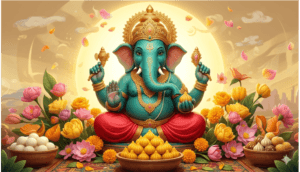
Lord Ganesha is called “Vighnaharta” because he removes the troubles and obstacles faced by his devotees. Since his vehicle is a mouse, he is also known as “Mooshakvahana.” His name “Siddhivinayak” identifies him as the deity who bestows success and spiritual accomplishments. The Ganapati Atharvashirsha and other devotional hymns describe his divine qualities, while his 108 names are especially chanted during Ganesh Chaturthi.
The Divine Glory of Lord Shree Ganesha
Lord Shree Ganesha is known as Vighneshwar and Vighnaharta because he is believed to remove obstacles, difficulties, and negative influences from the lives of his devotees.
He is worshipped as the deity of wisdom, intelligence, and knowledge. According to religious traditions, he wrote the great epic Mahabharata and understood its profound meaning. For this reason, he is also known as “Buddhidata,” the giver of wisdom and intellect.
Lord Ganpati is also regarded as a manifestation of “Omkareshwar” because he represents the primordial sound “Om,” which is considered the fundamental cosmic vibration and the source of universal energy.
According to Kundalini Yoga, Lord Ganesha resides in the Muladhara Chakra, also known as the Root Chakra. This chakra is considered the foundation of human existence. It is traditionally believed that Lord Ganesha helps regulate and balance the energy of all the chakras, allowing the cycle of life to function harmoniously.
Famous Stories Associated with Lord Ganpati
One of the most famous stories associated with Lord Ganesha concerns the Moon. One day, Ganpati Ji was returning on his mouse vehicle after receiving sweets offered by his devotees. On the way, his vehicle could not bear his weight, and he fell to the ground. Seeing this, the Moon began laughing at him.
Angered by the Moon’s laughter, Lord Ganesha cursed it, declaring, “Anyone who sees you on the day of Ganesh Chaturthi will face false accusations.” Later, when the Moon sincerely apologised, Lord Ganesha reduced the effect of the curse.
Another popular story is associated with Lord Kubera, the god of wealth. Kubera wanted to display his immense riches and therefore organised a grand feast. Lord Shiva understood his pride and sent Lord Ganesha to attend the feast.
Lord Ganpati began eating, but his hunger remained unsatisfied. Gradually, all the food was consumed, and he even began eating the utensils and furniture. Kubera became frightened and sought help from Lord Shiva. Goddess Parvati then offered Ganesha a bowl of sweet rice, which finally satisfied his hunger. This incident taught Kubera a lesson and destroyed his pride.
The story of Lord Ganesha’s marriage is also very interesting. According to a popular traditional account, because of his elephant-headed appearance and round body, no one initially wished to marry him. When he saw that other deities were getting married, he became upset and began creating obstacles during their wedding ceremonies.
The gods approached Lord Brahma for help. Brahma then created Riddhi and Siddhi and arranged their marriage to Lord Ganesha. Riddhi represents prosperity and abundance, while Siddhi symbolises spiritual accomplishment, perfection, and divine wisdom.
Worship of Lord Ganesha and Major Festivals
Lord Ganesha is among the most beloved deities in Hinduism. His devotees lovingly call him “Ganpati Bappa.” Ganesh Jayanti and Ganesh Chaturthi are his major festivals, celebrated throughout India with immense devotion, faith, and enthusiasm.
Initially, Ganesh Chaturthi was primarily celebrated as a private festival within homes. Over time, it became associated with wider community celebrations. Chhatrapati Shivaji Maharaj is traditionally associated with encouraging Ganesh worship during the Maratha period.
During British rule, public gatherings and celebrations faced restrictions. It was Lokmanya Tilak who played a major role in reviving and popularising the public celebration of Ganesh Utsav. Through this festival, he brought people together and helped strengthen the Indian freedom movement. In this way, Ganpati Bappa also became a symbol of unity and collective strength during India’s struggle for independence.
Even today, during Ganesh Chaturthi, clay idols of Lord Ganesha, ranging from small to large sizes, are installed in homes and public pandals. Devotees believe that Ganpati Bappa himself comes to reside in their homes during the festival.
Mumbai is particularly famous for its grand Ganesh Chaturthi celebrations. Devotees visit different pandals throughout the night and immerse themselves in devotion. The Siddhivinayak Temple, in particular, attracts a large number of devotees during this festival.
There are numerous famous temples dedicated to Lord Ganesha throughout India. The Ashtavinayak temples of Maharashtra are especially renowned. This group consists of eight different Ganesha temples, each associated with its own fascinating traditional stories and religious significance.
Mumbai’s Siddhivinayak Temple is widely known among devotees for fulfilling their wishes. On special occasions, people often stand in long queues, sometimes throughout the night, to seek the blessings of Lord Ganesha and participate in his devotional Aarti.
Apart from these, the Ganpatipule Temple and Dagdusheth Ganpati Temple are also highly famous. These temples are popularly regarded as places where sincere prayers and wishes are fulfilled, which is why devotees often associate them with the name “Ichhapurti Ganpati.” Receiving the opportunity to attend the Aarti of Lord Ganesha at any renowned Ganesha temple is considered a special blessing of Ganpati Bappa.
Frequently Asked Questions
Why Is Lord Ganesha Called the First Worshipped Deity?
Lord Shiva blessed Ganesha that he would be worshipped before all other deities at the beginning of every auspicious undertaking. This is why Lord Ganesha is known as the First Worshipped Deity.
What Is the Vehicle of Lord Ganesha?
Lord Ganesha’s vehicle is a mouse, known as Mooshak. Therefore, he is also called Mooshakvahana.
Why Is Lord Ganesha Called Ekadanta?
According to the popular story associated with the Mahabharata, Lord Ganesha broke one of his tusks and used it as a pen when his writing instrument broke while writing the epic. This is why he is known as Ekadanta, meaning the one with a single tusk.
What Is the Significance of Ganesh Chaturthi?
Ganesh Chaturthi is celebrated as the birth festival of Lord Ganesha. It is one of the most important Hindu festivals, observed with great devotion, enthusiasm, and traditional celebrations across India.