Introduction
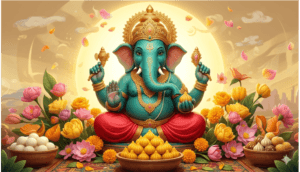
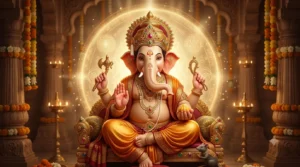
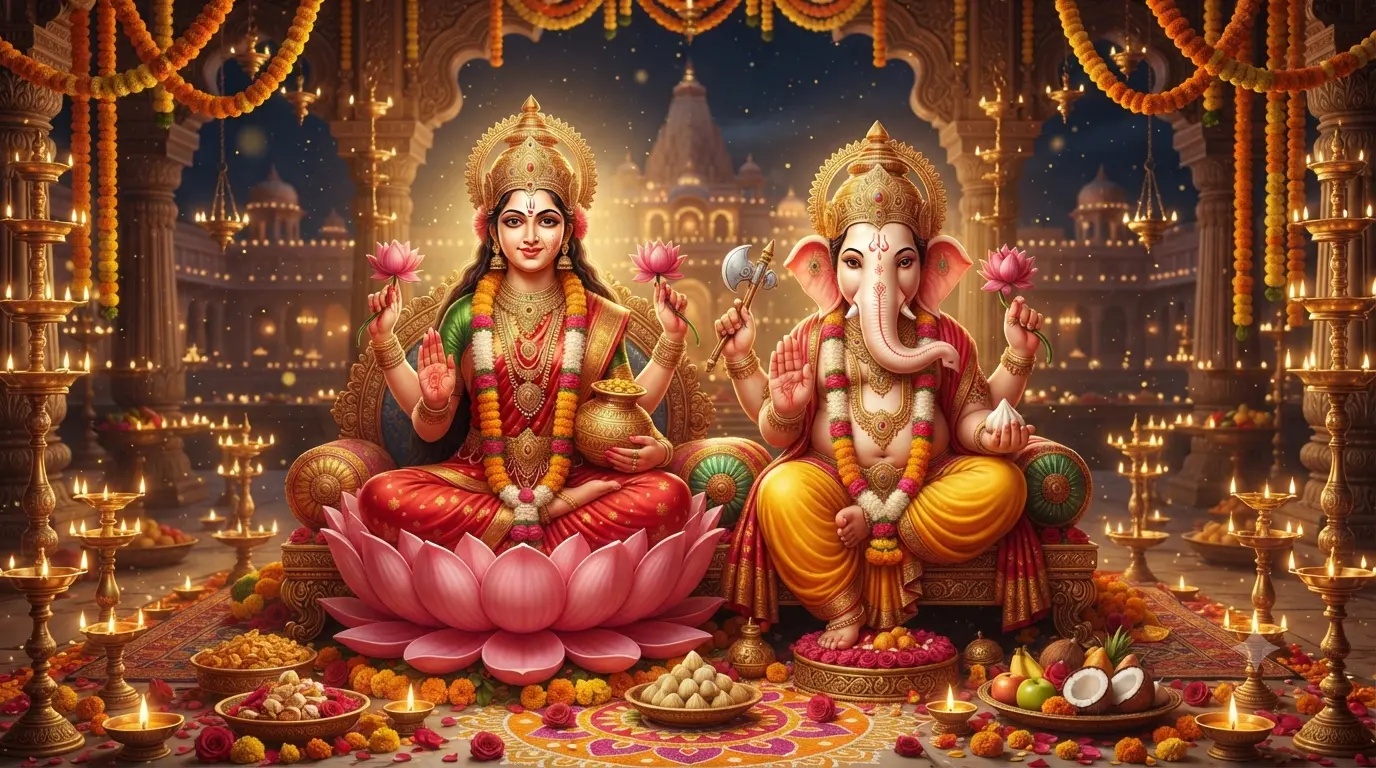
In Hinduism, Lord Ganesha is worshipped as the deity of wisdom, intellect, auspiciousness, and prosperity. For centuries, it has been a tradition to remember Lord Ganesha before beginning any auspicious work.
The Ganesh Birth Story is not merely a religious account. It also carries profound lessons about the love between parents and children, duty, obedience, and ultimately, compassion.
Lord Ganesha is worshipped by many different names, including Ganapati, Vinayaka, Gajanan, Ekadanta, Lambodara, and Vighnaharta. Each name reflects a special quality or aspect of his divine form. His birth story is particularly associated with Lord Shiva and Goddess Parvati.
Why Did Goddess Parvati Create Lord Ganesha?
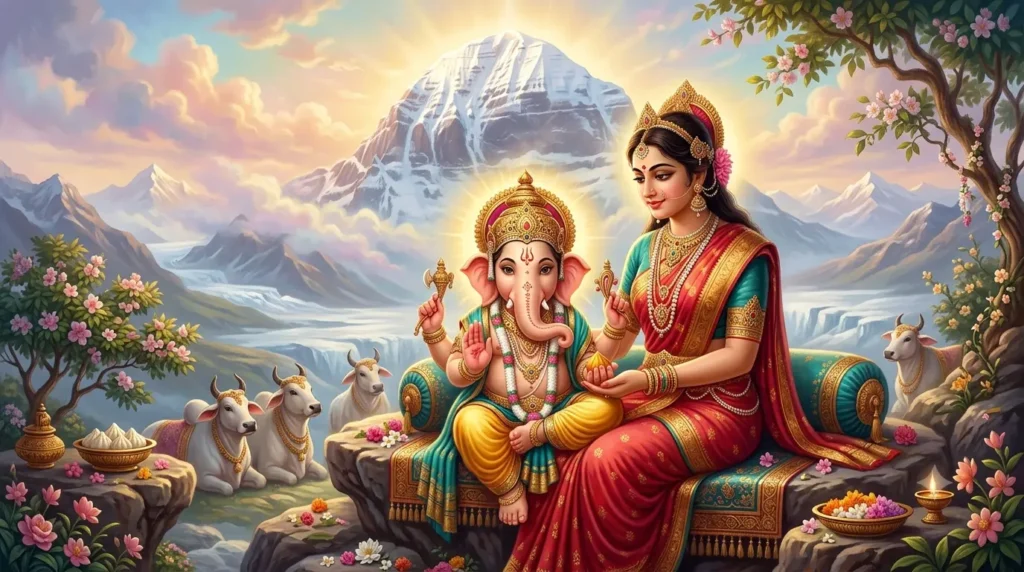
According to traditional Hindu mythology, Goddess Parvati once lived on Mount Kailash with Lord Shiva. One day, when she was preparing to take a bath, she wanted to ensure that nobody entered her private chamber until she had finished bathing.
Goddess Parvati used the sacred paste (Ubtan) from her body to create the figure of a young boy. She then infused life into that figure, bringing the boy to life. He was beautiful, radiant, and obedient.
Goddess Parvati accepted him as her own son and entrusted him with an important responsibility.
She instructed him, saying that while she was bathing, he must stand guard at the entrance and not allow anyone to enter without her permission.
The boy accepted his mother’s command.
This very boy later became famous as Lord Ganesha.
Lord Ganesha Considered His Mother’s Command His Duty
Following Goddess Parvati’s instructions, Lord Ganesha stood guard at the entrance. He did not know that Lord Shiva was his father. At that moment, the most important thing for him was obeying his mother’s command.
After some time, Lord Shiva arrived there. He attempted to enter, but Lord Ganesha stopped him.
Lord Shiva explained that he had come to meet Parvati and asked to be allowed inside.
However, Lord Ganesha respectfully replied that he could not allow anyone to enter without his mother’s permission.
Lord Shiva explained that he was Parvati’s husband and that it was not appropriate to stop him. Nevertheless, Lord Ganesha remained firm in his duty.
This incident reveals an important quality of Lord Ganesha’s character: once he accepted a responsibility, he fulfilled it with complete dedication.
The Conflict Between Lord Shiva and Lord Ganesha
When Lord Ganesha repeatedly refused to let Lord Shiva enter, Shiva’s attendants also tried to persuade him. However, Ganesha did not move from his position.
Gradually, the situation became serious, and a conflict broke out between the two sides. Lord Ganesha confronted Lord Shiva’s attendants and forced them to retreat.
When Lord Shiva learned that the young boy was preventing him from entering and had also defeated his attendants, the situation became even more serious.
Eventually, a battle took place between Lord Shiva and Lord Ganesha.
Lord Ganesha continued fighting with all his strength to protect his mother’s command.
Lord Shiva then used his trident (Trishul) to sever Ganesha’s head.
This incident is considered the saddest and most emotional part of the Ganesh Birth Story.
The Anger of Goddess Parvati
When Goddess Parvati learned what had happened to her son, she was overcome with grief. Seeing her beloved child lifeless also filled her with immense anger.
According to traditional mythological accounts, Goddess Parvati expressed her anguish before Lord Shiva and the gods and demanded that her son be brought back to life.
The gods became concerned by the intensity of Goddess Parvati’s anger. Lord Shiva then decided to resolve the situation.
He promised that Lord Ganesha would be brought back to life.
How Did Lord Ganesha Receive an Elephant’s Head?
Lord Shiva instructed his attendants to travel towards the north and bring back the head of the first living creature they encountered.
According to the story, they came across an elephant. They brought its head back, and Lord Shiva placed it on Ganesha’s body.
He then restored Lord Ganesha to life.
In this way, Lord Ganesha received his distinctive elephant-headed form and became known as Gajanan.
The elephant-headed appearance of Lord Ganesha is considered one of the most distinctive and symbolic forms in Hinduism.
Which Boons Did Lord Shiva Grant to Lord Ganesha?
After restoring Lord Ganesha to life, Lord Shiva accepted him as his own son and granted him several divine blessings.
The most important blessing was that Lord Ganesha would be worshipped before all other deities.
For this reason, Lord Ganesha is known as the Pratham Pujya, meaning the first deity to be worshipped.
According to religious belief, remembering Lord Ganesha before beginning any auspicious work, worship, yajna, or religious ceremony helps remove obstacles that may arise during the undertaking.
This is why he is also known as Vighnaharta, the remover of obstacles.
Why Is Lord Ganesha Worshipped First?
Lord Ganesha’s position as the first deity to be worshipped is not explained only through the story of his birth. Several traditional stories associated with his wisdom and intellect also highlight his importance.
According to a popular mythological story, Lord Shiva and Goddess Parvati once arranged a test for their two sons, Ganesha and Kartikeya.
They announced that whoever completed a journey around all three worlds and returned first would be declared the winner.
Kartikeya immediately mounted his peacock and set out to travel across the three worlds.
Lord Ganesha’s vehicle was a mouse. He thought for a few moments and then circumambulated his parents three times.
When asked why he had done so, he replied that his parents represented the entire universe to him.
Lord Shiva and Goddess Parvati were extremely pleased with his answer.
This story teaches us that Lord Ganesha’s greatest strength is not merely physical power, but his wisdom and intellect.
What Is the Meaning of Lord Ganesha’s Appearance?
Every aspect of Lord Ganesha’s divine form conveys an important message.
His large head inspires us to think broadly and develop greater understanding. His large ears teach us to listen more and speak thoughtfully.
His small eyes are considered a symbol of concentration and focus.
His long trunk represents the ability to adapt to different situations and circumstances.
His large belly is associated with patience, tolerance, and the ability to accept the different experiences of life.
His vehicle, the mouse, is also considered highly symbolic. The mouse represents the restless mind and uncontrolled desires. Lord Ganesha sitting above the mouse signifies that wisdom and knowledge can help us gain control over the restless mind.
Lessons from the Ganesh Birth Story
It is important to understand the deeper message of the Ganesh Birth Story rather than viewing it only as a mythological event.
Lord Ganesha considered his mother’s command supreme. He did not judge who was standing before him. Instead, he focused entirely on fulfilling his responsibility.
This teaches us that once we accept a responsibility, we should fulfil it with honesty and dedication.
On the other hand, Lord Shiva restoring Ganesha to life reminds us that even after anger and conflict, love and compassion should hold the highest place in relationships.
Lord Ganesha’s elephant-headed form also conveys a meaningful lesson: even after facing difficult circumstances in life, a new beginning is always possible.
Important Names of Lord Ganesha
Lord Ganesha is known by many names. Each name represents a particular quality or aspect of his divine form.
Ganapati – The Lord and leader of the Ganas (divine attendants).
Vinayaka – The divine leader and guide.
Gajanan – The one with an elephant-like face.
Ekadanta – The one with a single tusk.
Lambodara – The one with a large belly.
Vighnaharta – The remover of obstacles.
Siddhivinayak – The giver of spiritual accomplishments and success.
Mangalmurti – The embodiment of auspiciousness and благessings.
Why Is Lord Ganesha Worshipped Before Every Auspicious Work?
In the Sanatan tradition, worshipping Lord Ganesha at the beginning of any auspicious undertaking is an established religious practice.
Whether it is a home worship ceremony, a wedding, the beginning of a new business, a housewarming ceremony, or any religious ritual, devotees remember Lord Ganesha first.
The central belief behind this tradition is that every undertaking should begin with an auspicious intention and wisdom.
Lord Ganesha is known as Vighnaharta, the remover of obstacles. Therefore, devotees pray to him to remove difficulties from their work and bless them with the wisdom to make the right decisions.
The Connection Between Ganesh Chaturthi and Lord Ganesha’s Birth
Ganesh Chaturthi is celebrated on the fourth day of the bright fortnight of the Hindu month of Bhadrapada. On this occasion, Lord Ganesha is worshipped with special devotion.
Different parts of India celebrate Ganesh Utsav in different ways. In some places, devotees install idols of Lord Ganesha in their homes, while in other places, grand celebrations are organized in large public pandals.
Devotees welcome Lord Ganesha into their homes, worship him, and pray for happiness, prosperity, wisdom, and the well-being of their families.
The atmosphere during Ganesh Utsav becomes filled with devotion, music, and enthusiasm.
Spiritual Message of the Ganesh Birth Story
The birth story of Lord Ganesha also carries a profound spiritual message.
There are many situations in life when we must move beyond our old ways of thinking and personal limitations. Lord Ganesha’s human body and elephant head symbolize transformation and the pursuit of new knowledge.
In Indian tradition, the elephant is also associated with wisdom, strength, and patience. Therefore, Gajanan’s form is viewed not only as a remarkable divine appearance but also as a symbol of knowledge and intelligence.
Lord Ganesha’s story reminds us that life requires wisdom along with strength, humility along with knowledge, and patience along with success.
Conclusion
The Ganesh Birth Story is a popular mythological account describing the birth of Lord Ganesha and the origin of his distinctive elephant-headed form. From Goddess Parvati creating the young boy to Lord Shiva restoring his life and granting him the blessing of being worshipped first, this story is filled with deep emotions and meaningful lessons.
It conveys the love between parents and children, a child’s obedience, dedication towards one’s responsibilities, and ultimately, the values of compassion and acceptance.
For these reasons, Lord Ganesha continues to be worshipped by millions of devotees. The tradition of beginning every auspicious undertaking by remembering him reminds us that wisdom, intellect, and good intentions should always come first in everything we do.
Om Gam Ganapataye Namah.