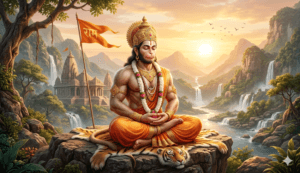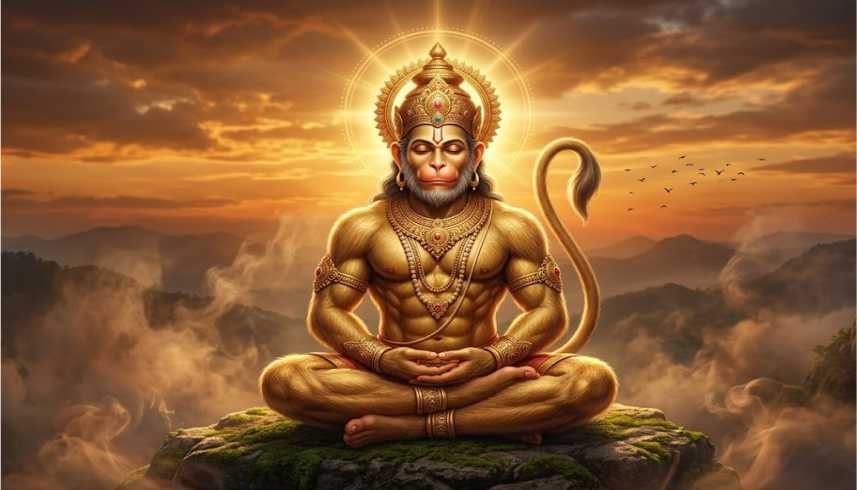
Lord Shree Hanuman – The Eternal Symbol of Devotion, Strength, and Surrender
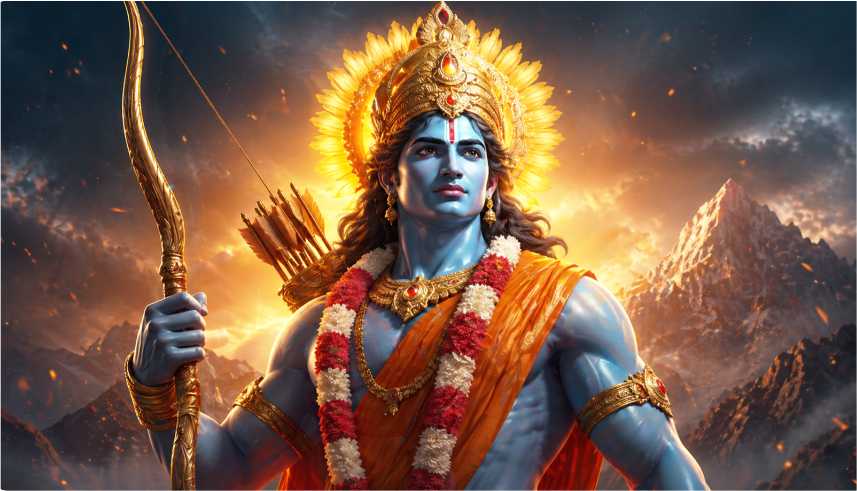
Lord Shree Hanuman is regarded in Sanatan Dharma as one of the greatest symbols of devotion, dedication, and immense strength. According to Bhakti Margdarshan, when a devotee worships God with true devotion, without any selfish motive or expectations, they receive success and positive results in life. This principle is beautifully reflected in the life of Lord Bajrangbali, who dedicated his entire strength and existence to the service of Lord Shree Ram.
Hanuman Ji is not merely the deity of strength and courage; He represents the highest ideal of devotion, in which a devotee is always ready to face every difficulty for the sake of their beloved deity. Let us explore the inspiring journey of Lord Shree Hanuman, including His birth, extraordinary divine deeds, powers, and path of devotion.
Birth of Lord Hanuman
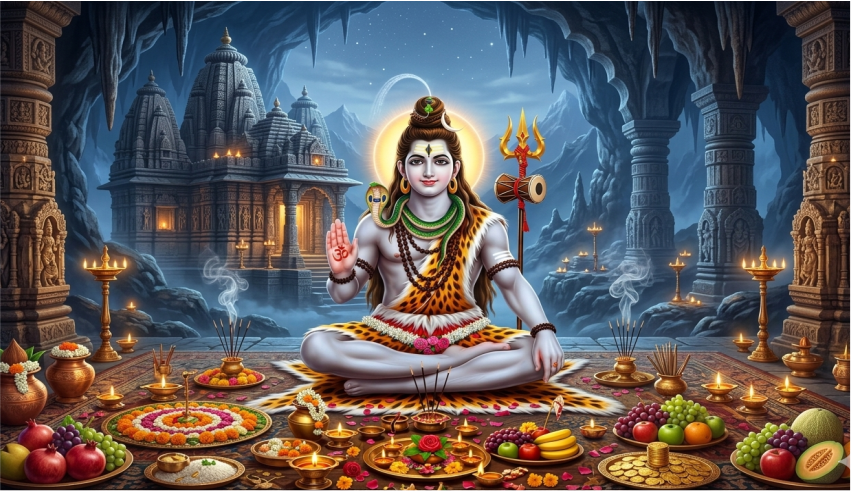
The birth story of Lord Hanuman is traditionally associated with Lord Shiva. According to popular belief, Lord Shiva wished to incarnate on Earth as a devotee to serve His beloved Lord Shree Hari Vishnu in His incarnation as Lord Shree Ram. With this divine purpose, He took birth in the form of Hanuman.
Hanuman Ji was born to Mother Anjani and Vanar King Kesari. Anjani was an apsara who had to take birth on Earth because of a curse. She performed intense penance to please Lord Shiva and sought His blessings for a son. Through divine grace and the blessings of Lord Vayu, she was blessed with a divine child.
According to one account, Lord Shiva and Goddess Parvati created a child through their divine essence and entrusted Him to Anjana and Kesari through Lord Vayu. Meanwhile, the Ramayana describes that when King Dasharatha of Ayodhya was performing a sacred Putrakameshti Yajna for a son, he received divine kheer as prasad. At the same time, Mother Anjana was worshipping Lord Shiva.
As part of the divine plan, a bird carried away a portion of that sacred kheer while flying, and a part of it fell into Mother Anjana’s hands. Through the influence of this divine offering, Lord Hanuman was born as an incarnation of Lord Shiva’s divine essence. For this reason, He is also known as Shivansh.
Hanuman Ji is called Anjaniputra, Anjaneya, and Anjanisut because He was the son of Mother Anjani. His names Kesarinandan and Kesarisut are associated with His father, Kesari. His initial name was Maruti because He is regarded as the son of Vayudev, also known as Marut.
Later, following an incident involving Lord Indra, He became famous by the name Hanuman. Since He was born through the grace of Lord Pavan, He is also known as Pavanputra and Vayuputra Hanuman. Religious scriptures mention 108 names of Lord Hanuman.
Stories and Names of Lord Hanuman
The Story Behind the Name Hanuman
During His childhood, Hanuman Ji was extremely playful and mischievous. One day, He saw the shining Sun in the sky and mistook it for a red fruit. He thought it was a large, bright mango. The young son of Anjani immediately leapt towards the Sun.
Seeing the Sun in danger, Lord Indra struck the child with His Vajra weapon. As a result, young Hanuman fell to the ground and injured His jaw. Seeing His son injured, Lord Vayu became extremely angry and stopped the flow of air across the Earth. This created a serious crisis throughout the universe.
All the gods then came together and pacified Lord Vayu. Lord Shiva revived Hanuman Ji, and all the deities blessed Him with numerous divine boons. Since His Hanu, meaning jaw, had been injured, He became known as Hanuman.
How Hanuman Ji Became Chiranjivi (Immortal)
After Lord Hanuman was struck by Indra’s weapon and brought back to life, Lord Brahma and the other deities granted Him several divine powers. Lord Brahma blessed Him with immortality and declared that He would remain alive on Earth throughout the ages.
For this reason, He is known as Chiranjivi, meaning a divine being who never ceases to exist. He removes the fears and difficulties of His devotees and is therefore also known as Sankatmochan.
The Stories Behind His Powers and Divine Names
Lord Surya blessed Hanuman Ji with the power to assume a small or gigantic form according to His wish. Because of this ability, He is also known as Mahakaya.
With this extraordinary power, He made a gigantic leap from Rameswaram towards Lanka and, after reaching there, assumed a tiny form to search for Mother Sita.
Why Is Hanuman Ji Known as a Celibate?
Lord Shree Hanuman is regarded as a lifelong celibate and Bal Brahmachari. The primary reason traditionally associated with this is His unwavering devotion to Lord Shree Ram and His lifelong commitment to serving Him.
He dedicated every moment of His life to the service of Lord Ram and the search for Mother Sita. It is believed that when He met Mother Sita in Ashoka Vatika, She blessed Him with eternal youth. Thereafter, He resolved to remain completely devoted to serving His beloved Lord and continued observing celibacy.
The Story Behind the Name Bajrangbali
There is also an interesting story behind the name Bajrangbali. When Lord Indra struck Hanuman Ji with His Vajra, He was blessed with a body as strong as the thunderbolt. The word Vajra became associated with Bajrang, while Bali means extremely powerful. Thus, He came to be known as Bajrangbali.
According to another popular story, one day Hanuman Ji asked Mother Sita what was most beloved to Lord Ram. Mother Sita explained that the sindoor applied to Her forehead was extremely dear to Lord Ram.
Hearing this, the innocent and devoted Hanuman covered His entire body with sindoor so that Lord Ram would become even more pleased. Since then, He has also been associated with the name Bajrangbali.
The All-Powerful Lord Hanuman
Because of the numerous boons He received during childhood, Hanuman Ji became extraordinarily powerful and invincible. However, due to His playful nature, He began disturbing sages and hermits.
The sages then cursed Him, saying that He would forget His own powers and would only be able to remember them when a knowledgeable person reminded Him. Later, Jambavan reminded Him of His extraordinary strength and abilities.
Helping Sugriva
Hanuman Ji first met Lord Ram at Rishyamukha Mountain. At that time, Lord Shree Ram was searching for Mother Sita, while Sugriva was living there out of fear of his brother Vali.
Hanuman Ji initially assumed the form of a Brahmin to test Lord Ram and Lakshman. However, when He realised that they were none other than His beloved Lord Shree Ram and His brother, He sought forgiveness and resolved to serve the Lord throughout His life.
Hanuman Ji as the Messenger of Lord Ram
When the Vanara army reached the southern seashore, they received indications that Mother Sita was in Lanka. Only the mighty Hanuman had the strength to cross the vast ocean.
Jambavan reminded Him of His forgotten powers, after which He leapt across the ocean and found Mother Sita in Ashoka Vatika. There, He introduced Himself as the messenger of Lord Ram and delivered the Lord’s message, reassuring Mother Sita. For this reason, He is also known as Sitashokavinashak, the remover of Mother Sita’s sorrow.
The Burning of Golden Lanka
When Hanuman Ji reached Lanka, He deliberately allowed Ravana’s army to capture Him so that He could assess its strength. As punishment, Ravana ordered his soldiers to set Hanuman’s tail on fire.
Using His divine powers, Hanuman Ji broke free from His restraints and set the entire golden city of Lanka ablaze with His burning tail. Because of this extraordinary feat of courage, He became known as Mahavir.
This incident is also traditionally associated with a story from the Shiva Purana, in which Nandi cursed Ravana, declaring that a vanara would destroy his strength and arrogance.
The Lord of the Vanaras
Hanuman Ji was considered the most powerful among the Vanaras and was therefore known as Kapishwar. During the war, He also led the Vanara army, which earned Him the name Kapisenanayak.
Display of Strength During the Battle of Lanka
During the battle between Lord Ram and Ravana, Hanuman Ji performed several important tasks. He rescued Lord Ram and Lakshman from Ahiravana and, when Lakshman was severely injured, brought the entire mountain containing the Sanjeevani herb.
For these extraordinary deeds, He is known as Lakshman Prandata and Sanjeevani Parvat Dharak.
Panchmukhi Hanuman
The form of Panchmukhi Hanuman is regarded as extremely powerful. According to the Ramayana tradition, when Ahiravana took Lord Ram and Lakshman to the netherworld, Hanuman Ji assumed His five-faced form to rescue them.
In this form, He had five faces: Hanuman, Narasimha, Garuda, Varaha, and Hayagriva. By extinguishing the five lamps burning in different directions simultaneously, He killed Ahiravana and freed Lord Ram and Lakshman.
This divine form is regarded as a symbol of strength, protection, and devotion.
Worship and Festivals of Lord Hanuman
Lord Hanuman is known as Sankatmochan because devotees believe that He protects them from all kinds of negative forces and difficulties. He is the embodiment of strength, courage, service, and selfless devotion.
Tuesday and Saturday are considered especially auspicious days for worshipping Him. Devotees recite the Hanuman Chalisa on these days and pray for protection from the adverse effects of Shani Dosha.
Sindoor and mustard oil hold special significance in His worship. Devotees offer red flowers, boondi laddoos, and coconuts to Him. They also light lamps and recite the Hanuman Chalisa, Bajrang Baan, and various Hanuman Mantras.
Many devotees believe that serving Lord Ram is the best way to please Hanuman Ji. Even today, wrestlers and athletes traditionally begin their practice by chanting “Jai Bajrangbali.”
In temples, Hanuman Ji is often depicted holding a mace and carrying the Sanjeevani mountain. He is regarded as the supreme celibate, and discipline and spiritual practice hold special importance in His worship.
Famous Hanuman Temples
Hanuman Jayanti
Hanuman Jayanti is celebrated as the birth anniversary of Lord Hanuman. It is generally observed on the full moon day of the Chaitra month, although some states in South India celebrate it during the Margashirsha month.
On this day, devotees observe fasts, recite the Hanuman Chalisa, and perform special worship in temples. In many places, continuous recitations of the Ramayana and Sundarkand are also organised.
Sarangpur Hanuman Temple, Gujarat
Located in Sarangpur in the Botad district of Gujarat, the Sarangpur Hanuman Temple is counted among the most famous Hanuman temples in India. Here, Lord Hanuman is worshipped as Kashtbhanjan Dev, the remover of suffering.
Devotees believe that visiting this temple helps free them from negative energies and obstacles. The magnificent idol of Hanuman Ji holding a large mace creates a deeply spiritual atmosphere for devotees.
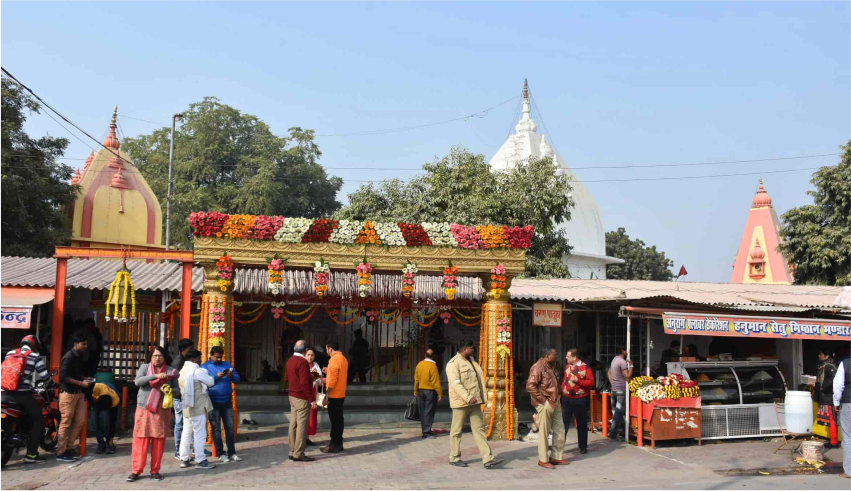
Hanuman Setu Temple, Lucknow
Located near the Gomti River in Lucknow, Uttar Pradesh, Hanuman Setu Temple is extremely famous. It is believed that the temple was established through the inspiration of Neem Karoli Baba.
After the floods of 1960, it was reconstructed by Dr. Rajendra Prasad, the first President of India. A large number of devotees visit the temple on Tuesdays and Saturdays to seek the blessings of Lord Hanuman.
Goddess Suvarchala Temple, Telangana
This temple is dedicated to Lord Hanuman and Goddess Suvarchala. Some ancient religious texts describe Suvarchala as the daughter of Lord Surya and the spiritual wife of Hanuman Ji.
Located in the Mangalagiri region of Andhra Pradesh, this temple is known for its spiritual significance and is visited by devotees seeking divine strength and blessings.
Shree Salasar Balaji Hanuman Temple, Rajasthan
Located in Salasar in the Churu district of Rajasthan, this temple is one of the most revered Hanuman temples in India. Here, Lord Hanuman is worshipped by the name Balaji.
A unique feature of this temple is its idol of Hanuman Ji, which depicts Him with a beard and moustache. Devotees visit the temple to pray for success, protection, and the fulfilment of their wishes.
Importance of Lord Hanuman in Daily Life
Worshipping Lord Hanuman is not limited to temples and religious festivals. People also remember Him in their daily lives to seek courage, self-confidence, and protection.
His pictures are placed in homes, shops, and vehicles as a symbol of protection against negative energies. Soldiers, athletes, and people involved in physically demanding work particularly regard Mahabali Hanuman as an embodiment of strength and endurance.
Students also recite the Hanuman Chalisa before examinations, seeking better concentration and self-confidence.
According to Bhakti Margdarshan, the greatest lesson taught by Lord Hanuman is selfless service and unwavering devotion. His worship is not limited to fulfilling material desires; it also inspires people to develop courage, a sense of duty, and complete dedication in their lives.
Frequently Asked Questions
Why Is Lord Hanuman Called Sankatmochan?
Lord Hanuman is called Sankatmochan because He is believed to remove the difficulties, fears, and negative influences affecting His devotees.
From Whose Divine Essence Was Lord Hanuman Born?
According to religious beliefs, Lord Hanuman is regarded as an incarnation of the divine essence of Lord Shiva.
What Is the Significance of Reciting the Hanuman Chalisa?
Reciting the Hanuman Chalisa is traditionally believed to provide courage, peace, protection, and mental strength.
What Does Panchmukhi Hanuman Represent?
Panchmukhi Hanuman is the five-faced divine form of Lord Hanuman, traditionally regarded as a symbol of strength and protection.