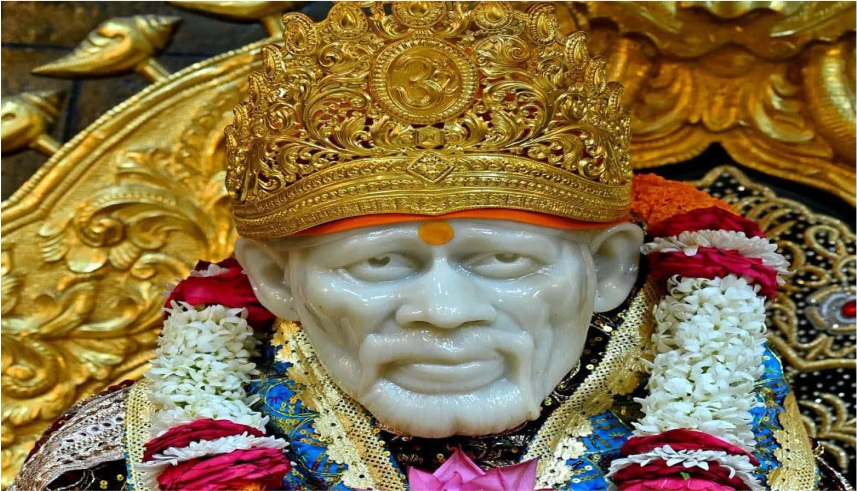
Shri Shirdi Sai Baba: Life, Miracles, and Spiritual Teachings
True faith in God and the Guru can transform a person’s life. The teachings of Shri Shirdi Sai Baba reflect this same truth. His message was that no matter how difficult life becomes, a person should never abandon the path of patience, faith, and truth. This is the divine spirit that Bhakti Margdarshan considers the foundation of spiritual peace and a righteous life. Throughout his life, Sai Baba showed people the path of love, service, compassion, and unwavering faith in God. Even today, millions of devotees draw inspiration from Sai Baba’s teachings and miracles.
Life Story
Many mysteries still surround the birth and early life of Shri Sai Baba. It is believed that he appeared at a young age in the village of Shirdi, in the Ahmednagar district of Maharashtra. At that time, India was under British rule. Sai Baba never gave clear information about his birth, family, or real name. Whenever anyone questioned him, he would answer in a mysterious manner. This is why many stories about his life became popular.
Some people believed that he was an orphan raised by a fakir. Some stories said that he was born into a boatman’s family in Pathri. Some people said that his mother was Hindu and his father was Muslim. At the same time, some devotees believed that he was an incarnation of Lord Dattatreya himself and had appeared on earth miraculously.
The most reliable information about Sai Baba’s life comes from “Shri Sai Satcharitra,” written by his devotee Hemadpant. It mentions that Sai Baba arrived in Shirdi at the age of about 16. He disappeared from there for some time in between and then returned around 1858, after which he remained in Shirdi for the rest of his life.
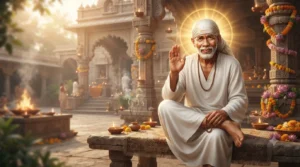
In the beginning, Sai Baba performed rigorous penance and meditation under a neem tree. For many years he wandered in the forests, and later he began living in a mosque. His life was extremely simple and saintly. He spoke little, and his words were often mysterious, leaving people astonished.
A temple priest gave him the name “Sai,” which is considered to mean a divine person. Since he had no known name, people began respectfully calling him “Sai Baba.” The word “Baba” means a respected elder or guru. Initially, many people opposed him, considering him a fraud, but over time, seeing his miracles, compassion, and divinity, those very people became his devotees.
Philosophy and Teachings
Sai Baba was accepted with equal reverence by both Hindu and Muslim communities. Not only that, but people of various religions also regarded him as a spiritual guru. The main reason was that he never limited himself to any one religion. His famous message, “Sabka Malik Ek” (One Master of All), continues to unite humanity even today.
Sai Baba opposed discrimination based on caste, religion, and community. He saw everyone with equal eyes and taught the lesson of love and humanity. His teaching was that a person should follow his own religion while respecting others.
He explained to his devotees the importance of “Shraddha” and “Saburi.” Shraddha means unwavering faith, and Saburi means patience. He said that if a person adopts these two qualities, he can overcome every difficulty in life.
Sai Baba inspired people to live a moral and righteous life. He said that if you cannot help someone, then at least do not hold bad thoughts or behave insultingly toward anyone. He considered humility, kindness, and service to be the greatest religion of life.
His followers were not limited to any one class or community. People of all religions came to him, and he inspired everyone to walk on the path of Bhakti Margdarshan. Describing the glory of the “Satguru,” he said that only a true guru shows a person the path to reach God.
Sai Baba taught attaining self-knowledge through meditation and spiritual practice. He believed that God exists within every living being, and true spiritual practice lies in recognizing Him.
A beautiful harmony of Bhakti Yoga, Jnana Yoga, and Karma Yoga is visible in his teachings. This is why Sai Baba Teachings continue to provide a positive direction to the lives of millions of people even today.
Miracles
Sai Baba is also worshipped with deep reverence because of his miracles. Many events occurred in his life that left people astonished. These miracles are described in detail in “Shri Sai Satcharitra.”
During Diwali, Sai Baba would light lamps every day. Once, the village merchants refused to give him oil. Then Sai Baba lit the lamps with water alone. Seeing this scene, the entire village was stunned. Even those who had opposed him began to accept his glory. The bhajan “Deepawali Manaye Suhani,” based on this event, remains famous even today.
In another event, the village was troubled by a severe drought. The wells had dried up, and people were disheartened. Sai Baba calmly said, “When the well is filled with water, why do you worry?” People went and saw that the dry well had filled with water. This event strengthened people’s faith even more.
Many people also came to test him. One person tried to challenge Sai Baba. But in their very first meeting, Sai Baba called him by his name and answered the questions in his mind. That person understood that this was not an ordinary human being but a divine power. He immediately fell at his feet.
In a famous event, a couple came to Shirdi to seek Sai Baba’s blessings. While departing, Sai Baba gave them his sacred “Udi” (ash). On the way back, heavy rain began. Then Sai Baba said, “O my Lord, stop the rain, my children have to go home.” Miraculously, the rain stopped, and the couple reached home safely.
Many such events are narrated in “Shri Sai Satcharitra” and Sai Baba Bhajan, which introduce Sai Baba’s glory and his teachings.
Devotion and Temple
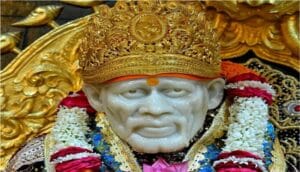
The mysterious events and spiritual power associated with Sai Baba’s life made him the guru and object of worship for millions of people. The place where he meditated under the neem tree is today home to the grand Sai Baba Temple. The mosque where he lived was rebuilt and named “Dwarkamai.”
Today, the Shirdi Sai Baba Temple is counted among the largest pilgrimage sites not only in Maharashtra but throughout India. In the 19th century, where only a few people were his followers, today millions of devotees from the country and abroad arrive in Shirdi.
Many devotees observe fasts and walk in the “Sai Palkhi” procession to reach Shirdi. During the journey, devotees express their faith by singing Sai Bhajans, Mantras, and Kirtans.
Every day, Sai Baba’s Aarti is performed at fixed times in the temple. Devotees stand in queues for hours to have darshan and keep singing bhajans during this time. The discipline of the devotees and their cooperation with one another show that Sai Baba’s teachings are still alive in people’s lives today.
Sai Baba’s Mantras are also considered extremely powerful. Chanting the “Om Shri Sai Baba Maha Mantra” provides peace, stability, and positive energy to the mind. This divine sound echoing in temples gives devotees an experience of spiritual bliss and gives a new direction to their lives.
Frequently Asked Questions
What was Sai Baba’s main message?
Sai Baba’s most famous message was “Sabka Malik Ek,” which means that God is one and all human beings are equal.
What importance did Sai Baba give to Shraddha and Saburi?
He said that to attain success and peace in life, Shraddha (faith) and Saburi (patience) are essential.
Where is the Shirdi Sai Baba Temple located?
The Shirdi Sai Baba Temple is located in Shirdi village in the Ahmednagar district of Maharashtra.
Why is Sai Baba’s Udi famous?
Sai Baba’s Udi is considered sacred and miraculous. Devotees regard it as a symbol of blessing and protection.