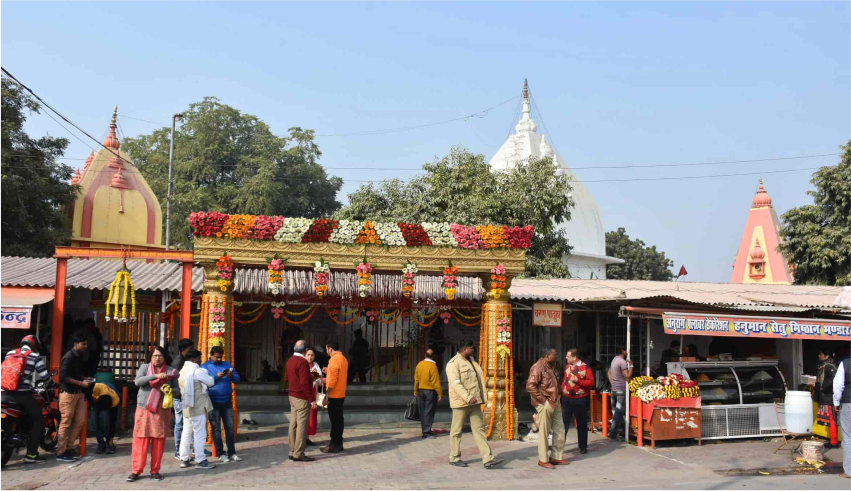
Hanuman Setu Temple Lucknow is a famous temple dedicated to Lord Hanuman, situated on the banks of the Gomti River in Lucknow, Uttar Pradesh. The temple is closely associated with the great saint Baba Neem Karoli and is also known as Lucknow Ashram and Sankat Mochan Hanuman Temple. The present temple was inaugurated on 26 January 1967.
One of the most distinctive traditions of Hanuman Setu Temple is the practice of sending letters to Lord Hanuman as a form of prayer. Devotees from India and abroad write letters expressing their wishes and prayers and send them to the temple. Because of this tradition, devotees lovingly call Lord Hanuman here “Chitthi Wale Baba” (The Lord Who Receives Letters). According to information associated with the temple, Lord Hanuman also came to be known as “Graduate Hanuman” because the temple is located near Lucknow University.
The Gomti River, Hanuman Setu Bridge, Baba Neem Karoli and Lord Hanuman together give this temple a special place among the important religious sites of Lucknow. In this article, learn about the history of Hanuman Setu Temple Lucknow, its connection with Baba Neem Karoli, the tradition of Chitthi Wale Hanuman, temple features, darshan timings, aarti, major religious celebrations, address and how to reach the temple.
History of Hanuman Setu Temple
The history of Hanuman Setu Temple is closely associated with Baba Neem Karoli and his devotion to Lord Hanuman. According to traditions associated with the temple, before the present temple was built, there was a small Hanuman temple and a place of spiritual practice belonging to Baba Neem Karoli on the banks of the Gomti River.
In 1960, following floods in the Gomti River, people living around the river were asked to move to safer locations. Accounts associated with the temple state that the old structures were damaged by the floods, while the idol of Lord Hanuman is believed to have remained safe according to devotees’ traditions. Following this incident, efforts towards constructing the present temple at the location moved forward.
Around the same time, construction work on a bridge over the Gomti River was also underway. According to a local tradition associated with the temple, when difficulties arose during the bridge construction, Baba Neem Karoli was consulted, and he suggested building a Hanuman temple at the site. After this, the construction of both the temple and the bridge progressed. This account has been published with reference to temple priests and local traditions, so it is appropriate to understand it as a religious and local belief.
After the construction of the present Hanuman Setu Temple was completed, it was opened to devotees on 26 January 1967. Inspired by Baba Neem Karoli and associated with his role in establishing the temple, this place gradually became one of the major Hanuman temples in Lucknow.
Every year, around 26 January, the temple’s foundation day and annual celebration are observed with religious programmes. In 2024, on the occasion of the temple’s 57th foundation day, programmes such as Vedic recitation, worship, bhajans, devotional music and a community feast (bhandara) were organised.
Baba Neem Karoli and Hanuman Setu Temple
Hanuman Setu Temple is deeply connected with Baba Neem Karoli’s devotion to Lord Hanuman. Baba Neem Karoli is regarded as a devoted follower of Hanuman, and several Hanuman temples and ashrams across India are associated with his spiritual tradition.
Hanuman Setu Temple is also known as Lucknow Ashram. Statues of Baba Neem Karoli are installed within the temple complex. According to available information about the ashram, the premises contain two statues of Baba Neem Karoli, two statues of Lord Hanuman and two Shiva Lingams.
Because of Baba Neem Karoli’s devotion to Lord Hanuman, this temple holds special importance for his followers as well. Along with devotees who come for the darshan of Lord Hanuman, many people who have faith in Baba also visit the temple.
Chitthi Wale Baba: The Tradition of Sending Letters to Lord Hanuman
One of the most distinctive features of Hanuman Setu Temple is its tradition of sending letters to Lord Hanuman.
Devotees who are unable to visit the temple in person for any reason write their prayers and personal thoughts in letters addressed to Lord Hanuman. According to published accounts associated with the temple, these letters are sent to the temple by post, while some devotees also place their letters in the temple’s donation box.
According to information associated with the temple, priests read these letters in front of Lord Hanuman and offer them at his feet. Later, the letters are immersed in the earth. Because of this tradition, devotees lovingly call Lord Hanuman “Chitthi Wale Baba” (The Lord Who Receives Letters).
For devotees who visit the temple, this is not merely a religious tradition but also a way of expressing their feelings and prayers before the Lord. People write about their difficulties, wishes and even their gratitude in these letters.
Why Is Lord Hanuman Called Graduate Hanuman?
At Hanuman Setu Temple, Lord Hanuman is also popularly known as “Graduate Hanuman.”
According to information associated with the temple, it is located close to Lucknow University. For this reason, Baba Neem Karoli is said to have referred to Lord Hanuman as “Graduate Hanuman”. Over time, this name also became popular among devotees.
The name does not represent a separate religious title. Instead, it is associated with the temple’s location and a special tradition connected with Baba Neem Karoli.
Architecture and Special Features of Hanuman Setu Temple
White marble is prominently used in the main structure of Hanuman Setu Temple. According to descriptions associated with the temple, a large white marble idol of Lord Hanuman is installed here. The idol is said to have been carved from a single piece of stone and is approximately 6.5 feet tall.
The temple’s prayer hall is described as oval-shaped, and according to an older description of the temple, it has seating arrangements for approximately 250 devotees. The design of the prayer hall is said to allow devotees to have a view of Lord Hanuman’s idol from different positions.
The temple walls feature religious scenes associated with Lord Rama, Goddess Sita, Lakshmana and Lord Hanuman. Scenes depicting the construction of the bridge in the Ramayana are also part of the temple’s decoration.
Over time, temples and idols of other deities have also been added to the temple complex. These include Ram Darbar, a Shiva Temple and places of worship associated with Lord Ganesha, Goddess Lakshmi and Goddess Durga. Information has also been published about the installation of Shri Ram Darbar at the temple in 2016.
Religious Significance of Hanuman Setu Temple
Hanuman Setu Temple is an important centre of devotion to Lord Hanuman. Devotees visit this temple to seek the blessings of Lord Hanuman through darshan, worship and prayer.
The temple’s most distinctive religious tradition is the practice of sending letters as prayers. Devotees believe that expressing their thoughts before Lord Hanuman with faith gives them courage during difficult times and brings peace of mind. Beliefs regarding the fulfilment of wishes are matters of devotees’ religious faith and traditions associated with the temple.
The presence of Baba Neem Karoli, along with Lord Hanuman, also holds special significance for devotees. The temple is known for its traditions of devotion, service and prasad distribution. Information associated with the ashram also mentions prasad distribution and community feasts (bhandaras) as part of the temple’s activities.
Aarti and Darshan Timings at Hanuman Setu Temple
According to currently available information associated with the temple, devotees can have darshan at Hanuman Setu Temple from 5:00 AM to 11:00 PM.
Aarti timings may vary depending on the season and temple arrangements. Published information about the temple mentions different aarti timings for summer and winter. Therefore, devotees planning to attend a particular aarti are advised to confirm the current timings before visiting.
Note: Darshan and aarti timings may change due to special festivals, religious events, crowds or temple arrangements.
Major Festivals and Religious Events at Hanuman Setu Temple
Major festivals associated with Lord Hanuman are celebrated with devotion at Hanuman Setu Temple. Among these, Hanuman Jayanti is a particularly important occasion.
Bada Mangal is also an important religious occasion associated with the worship of Lord Hanuman in Lucknow. On Tuesdays during the Hindu month of Jyeshtha, special prayers, community feasts and religious programmes are organised at various Hanuman temples across the city. Special religious activities and large gatherings of devotees can also be seen at Hanuman Setu Temple during Bada Mangal.
Apart from these occasions, 26 January is celebrated as the foundation day of Hanuman Setu Temple. Religious programmes such as worship, abhishek, bhajans, Vedic recitation, devotional music and community feasts have traditionally been organised on this occasion.
Prasad and Bhandara at Hanuman Setu Temple
Prasad and bhandara also hold a special place in the religious traditions of Hanuman Setu Temple. According to information associated with the ashram, the distribution of prasad is an important service activity here. Community feasts are also organised on special religious occasions.
For devotees, a bhandara is not merely an opportunity to receive food but is also connected with the religious spirit of service and receiving prasad.
Hanuman Setu Temple – Quick Information
| Information | Details |
|---|---|
| Temple Name | Hanuman Setu Temple |
| Other Names | Lucknow Ashram, Sankat Mochan Hanuman Temple |
| Presiding Deity | Lord Shri Hanuman |
| Major Association | Baba Neem Karoli |
| Inauguration of Present Temple | 26 January 1967 |
| Location | Hanuman Setu, University Road, Lucknow |
| Darshan Timings | 5:00 AM to 11:00 PM* |
| Entry | Free for general darshan |
| Special Tradition | Sending letters to Lord Hanuman as prayers |
| Popular Names | Chitthi Wale Baba, Graduate Hanuman |
| Major Festivals | Hanuman Jayanti, Bada Mangal |
| Foundation Day | 26 January |
*Darshan and aarti timings may change on special occasions. It is advisable to confirm the current timings before visiting.
Where Is Hanuman Setu Temple Located?
Hanuman Setu Temple is located in the Hanuman Setu, University Road, Babuganj, Hasanganj, Lucknow, Uttar Pradesh – 226007 area. The temple is situated near the Gomti River, opposite Lucknow University.
How to Reach Hanuman Setu Temple?
By Road
Hanuman Setu Temple can be reached by road from different parts of Lucknow. Visitors can use private vehicles, auto-rickshaws, taxis and local transport.
Since the temple is located on University Road, Lucknow University can be used as a major landmark for finding the temple.
From the Railway Station
Devotees travelling to Lucknow by train can reach Hanuman Setu Temple from the railway station using local taxis, auto-rickshaws or cabs. Travel time depends on the starting point and traffic conditions at the time of travel.
From the Airport
Visitors arriving at Chaudhary Charan Singh International Airport, Lucknow, can reach the temple by taxi or cab. Travel time may vary depending on traffic conditions.
Things to Keep in Mind Before Visiting Hanuman Setu Temple
Visitors should respect the religious traditions and decorum of the temple while seeking darshan. During crowded occasions, particularly Tuesdays, Hanuman Jayanti and Bada Mangal, allowing extra time for darshan may be helpful.
If you wish to attend a particular aarti or religious programme, it is better to check its current timing before visiting, as the schedule may change depending on the occasion and temple arrangements.
Visitors should follow the facilities and entry rules available within the temple complex and respect its religious practices.
Conclusion
Hanuman Setu Temple Lucknow is an important religious destination associated with the devotion of Lord Shri Hanuman. Its history is connected with Baba Neem Karoli, the Gomti River and traditions associated with the construction of the present Hanuman Setu. Since the inauguration of the present temple on 26 January 1967, it has established a special place among the major Hanuman temples of Lucknow.
The temple’s most unique identity is its tradition of sending letters to Lord Hanuman as prayers. Because of this, devotees lovingly call him “Chitthi Wale Baba.” The name “Graduate Hanuman” is also popular among devotees and is associated with the temple’s location near Lucknow University.
The faith associated with Baba Neem Karoli, devotion to Lord Hanuman, unique temple traditions, religious scenes from the Ramayana and various religious celebrations make this temple an important part of Lucknow’s spiritual identity.
If you are planning a religious visit to Lucknow, you can include Hanuman Setu Temple in your itinerary and experience its unique traditions along with the darshan of Lord Shri Hanuman.
FAQ – Hanuman Setu Temple Lucknow
Where is Hanuman Setu Temple located?
Answer: Hanuman Setu Temple is located at Hanuman Setu, University Road, Babuganj, Hasanganj, Lucknow, Uttar Pradesh – 226007. It is situated near the Gomti River, opposite Lucknow University.
When was Hanuman Setu Temple built?
Answer: The present Hanuman Setu Temple was inaugurated on 26 January 1967. Its establishment is associated with Baba Neem Karoli.
Why is Hanuman Setu Temple known as Chitthi Wale Baba?
Answer: According to the temple’s special tradition, devotees send letters addressed to Lord Hanuman. These letters are offered before Lord Hanuman. Because of this tradition, devotees lovingly call him Chitthi Wale Baba.
Why is Lord Hanuman at Hanuman Setu Temple called Graduate Hanuman?
Answer: The temple is located near Lucknow University. According to information associated with the temple, Baba Neem Karoli referred to Lord Hanuman as Graduate Hanuman for this reason.
What are the darshan timings of Hanuman Setu Temple?
Answer: According to currently available information associated with the temple, darshan is available from 5:00 AM to 11:00 PM. Timings may change on special occasions.
Is there an entry fee at Hanuman Setu Temple?
Answer: No entry fee is generally mentioned for regular temple darshan. Rules for special worship or other services may be different.
Is Hanuman Setu Temple associated with Baba Neem Karoli?
Answer: Yes. Hanuman Setu Temple and Lucknow Ashram are associated with the spiritual tradition of Baba Neem Karoli. He is also connected with the establishment and inauguration of the present temple.
Which major festivals are celebrated at Hanuman Setu Temple?
Answer: The major religious occasions celebrated here include Hanuman Jayanti, Bada Mangal and the temple’s foundation day on 26 January. Worship, bhajans, religious programmes and community feasts may be organised on these occasions.