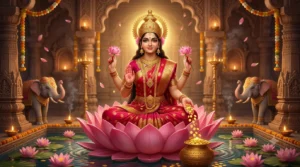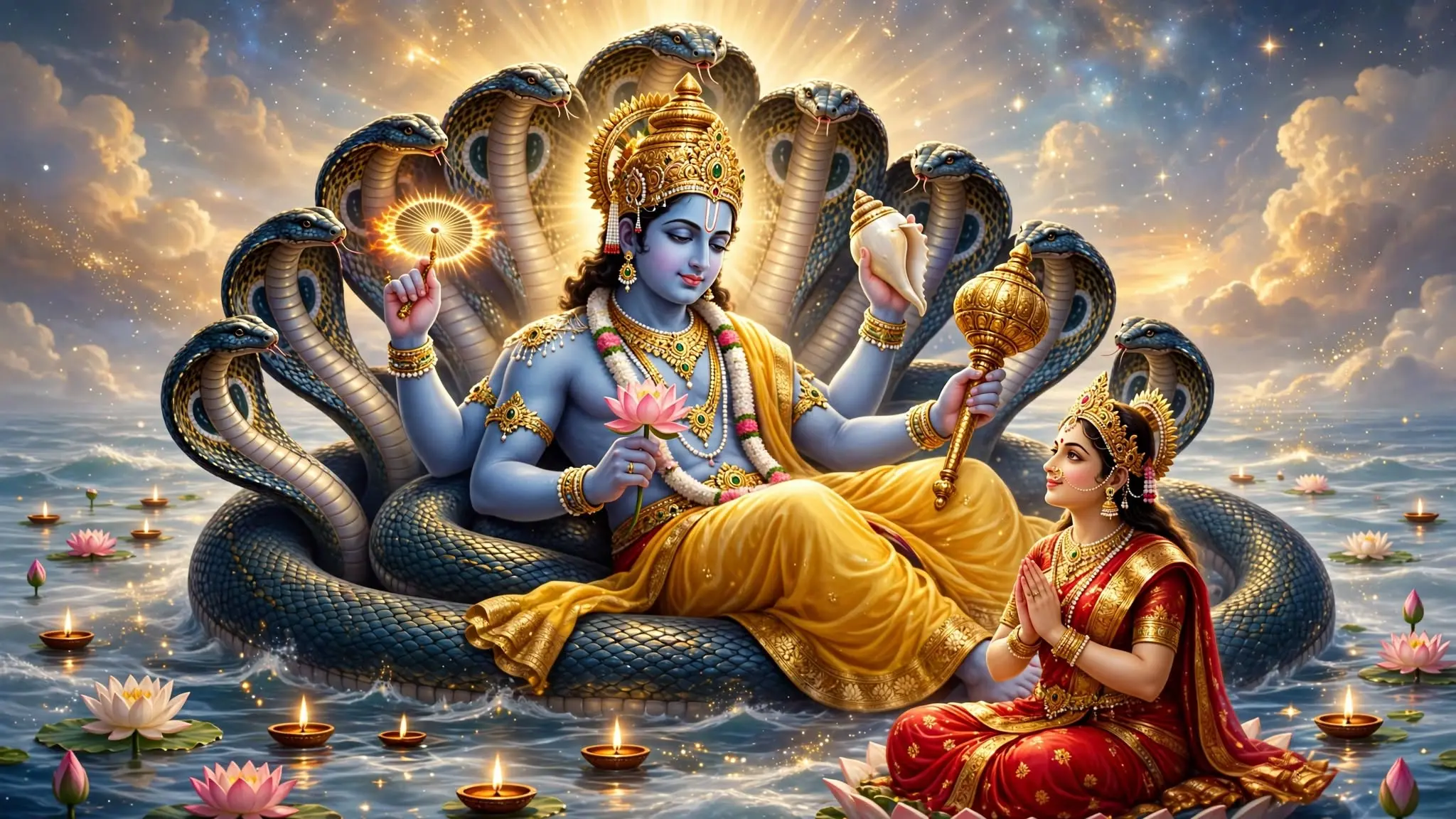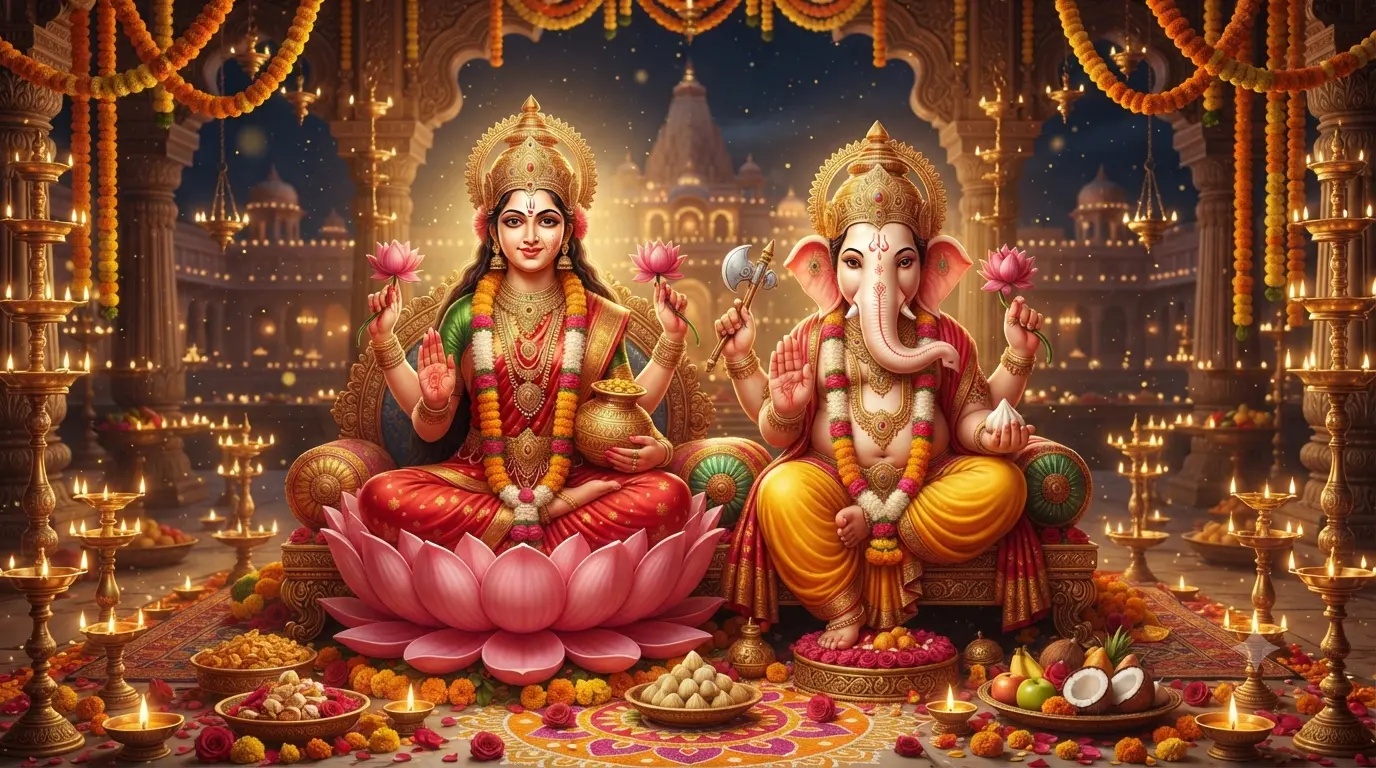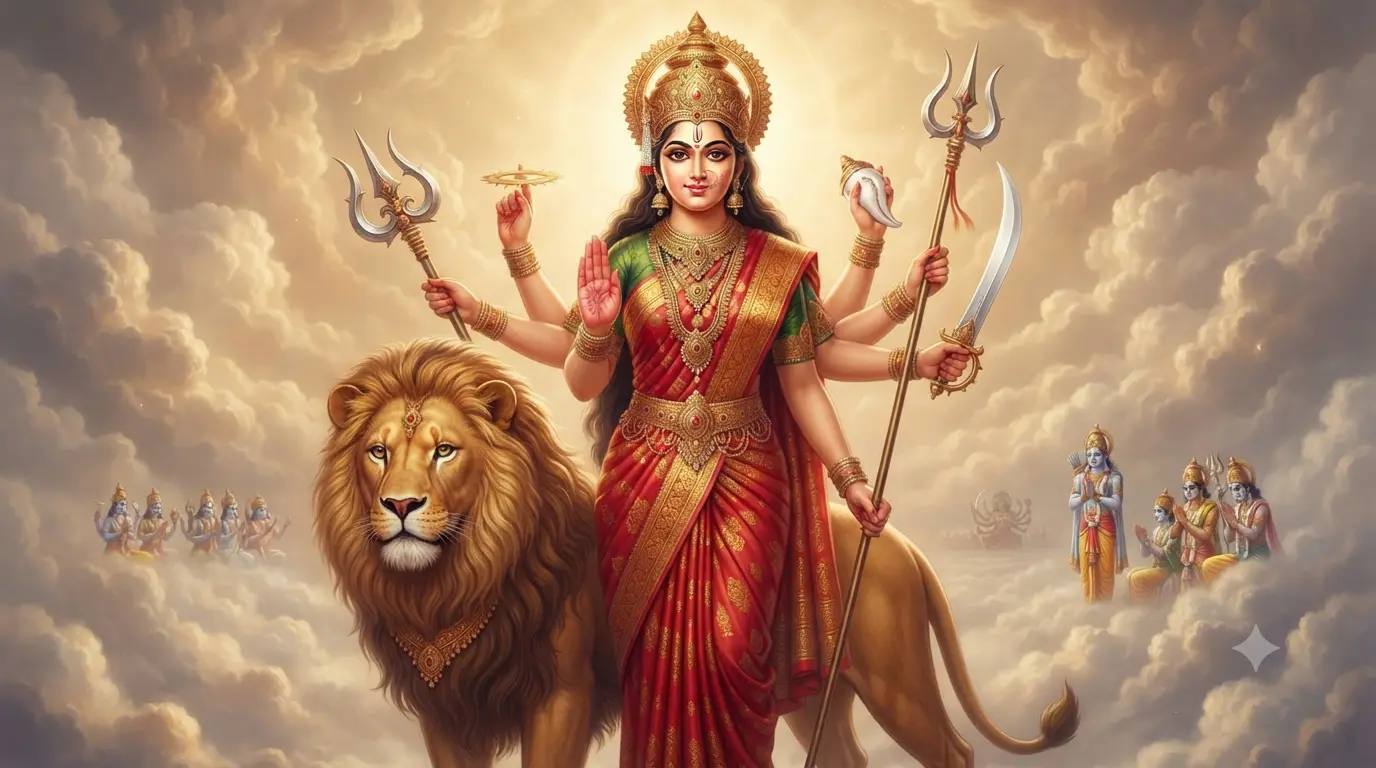
Durga Saptashati Chapter 4 beautifully describes the glory of Goddess Durga and the praise offered to her by the gods. After the slaying of Mahishasura, all the gods are delighted by the divine form of the Goddess and offer prayers to her. They worship her as the supreme source of the universe, the power behind wisdom, faith, compassion, and well-being. This chapter offers a heartfelt description of the Goddess’s grace, divine power, and protective nature.
Shri Durga Saptashati – Chapter 4
Praise of the Goddess by the Gods After the Slaying of Mahishasura
Dhyanam (Meditation)
Om Kaala-Abhraabhaam Kataakshair-Ari-Kula-Bhayadaam Mauli-Baddhendu-Rekhaam
Shankham Chakram Kripaanam Trishikham Api Karair-Udvahanteem Trinetraam।
Simha-Skandha-Adhi-Roodhaam Tribhuvanam-Akhilam Tejasaa Poorayanteem
Dhyaayed Durgaam Jayaakhyaam Tridasha-Parivritaam Sevitaam Siddhi-Kaamaih॥
Simple Meaning of the Meditation:
I meditate upon Goddess Durga, whose complexion resembles a dark rain-filled cloud and whose compassionate glance removes the fear of enemies. The crescent moon adorns her forehead. She holds a conch, discus, sword, and trident in her hands, and she has three eyes. Seated upon a lion, she illuminates all three worlds with her divine radiance. Surrounded by the gods, this victorious form of the Goddess is worshipped with devotion by those who seek spiritual accomplishment.
The Gods Praise the Goddess
Rishir Uvaacha॥1॥
Shakraadayah Sura-Ganaa Nihate’ti-Veerye
Tasmin Duraatmani Suraari-Bale Cha Devyaa।
Taam Tushtuvuh Pranati-Namra-Shirodharaamsaah
Vaagbhih Praharsha-Pulakodgama-Chaaru-Dehaah॥2॥
Meaning:
The sage said: After the Goddess had slain the extremely powerful and wicked Mahishasura, along with his army of demons, all the gods, including Indra, were filled with joy. Their bodies were covered with horripilation, and they bowed their heads before the Goddess and began praising her.
Devyaa Yayaa Tatam Idam Jagad-Aatma-Shaktyaa
Nihshesha-Deva-Gana-Shakti-Samoohamoortyaa।
Taam Ambikaam Akhila-Deva-Maharshi-Poojyaam
Bhaktyaa Nataah Sma Vidadhaatu Shubhaani Saa Nah॥3॥
Meaning:
We bow with devotion before Goddess Ambika, who has pervaded the entire universe through her divine power and embodies the combined energies of all the gods. She is worshipped by all the gods and great sages. May that Divine Mother bless us and bring us well-being.
Yasyaah Prabhaavam Atulam Bhagavaan Ananto
Brahmaa Harash Cha Na Hi Vaktum Alam Balam Cha।
Saa Chandikaakhila-Jagat-Paripaalanaaya
Naashaaya Chaashubha-Bhayasya Matim Karotu॥4॥
Meaning:
Even Lord Vishnu, Lord Brahma, and Lord Shiva cannot fully describe the incomparable glory and power of the Goddess. May that Goddess Chandika protect the entire universe and resolve to destroy all that is inauspicious and fearful.
Yaa Shrih Svayam Sukritinaam Bhavaneshv-Alakshmih
Paapaatmanaam Kritadhiyaam Hridayeshu Buddhih।
Shraddhaa Sataam Kulajana-Prabhavasya Lajjaa
Taam Tvaam Nataah Sma Paripaalaya Devi Vishvam॥5॥
Meaning:
O Goddess! You reside in the homes of virtuous people as Goddess Lakshmi. Among those who are sinful, you manifest in the opposite form. You dwell in the hearts of the righteous as wisdom and in virtuous people as faith. You are also the sense of modesty found in those born into noble families. We bow before you. O Goddess, protect the entire world.
Kim Varnayaama Tava Roopam Achintyam Etat
Kim Chaativeeryam Asura-Kshaya-Kaari Bhoori।
Kim Chaahaveshu Charitaani Tava Adbhutaani
Sarveshu Devy-Asura-Deva-Ganaadikeshu॥6॥
Meaning:
O Goddess! How can we describe your inconceivable divine form? How can we praise your immense power, which destroys demons? How can we adequately describe your wondrous deeds and extraordinary valour displayed in the battles between the gods and demons? Your glory is beyond the power of words to express fully.
Hetuh Samasta-Jagataam Trigunaapi Doshair Na
Jnaayase Hari-Haraadibhir-Apy-Apaaraa।
Sarvaashrayaakhilam Idam Jagad-Amsha-Bhootam
Avyaakritaa Hi Paramaa Prakritis-Tvam-Aadyaa॥7॥
Meaning:
O Goddess! You are the fundamental cause of the entire universe. Although associated with the three Gunas—Sattva, Rajas, and Tamas—you remain beyond their limitations. Even Lord Vishnu, Lord Shiva, and the other gods cannot fully comprehend your boundless nature. This entire universe is but a part of you. You are the primordial and supreme Prakriti, the original source and support of all creation.
Yasyaah Samasta-Surataa Samudeeranena
Triptim Prayaati Sakaleshu Makheshu Devi।
Svaahaasi Vai Pitri-Ganasya Cha Tripti-Hetur
Uchchaaryase Tvam Ata Eva Janaih Svadhaa Cha॥8॥
Meaning:
O Goddess! The offerings made to the gods during all sacrificial rituals satisfy them through your divine power. You are invoked as Swaha, through whom the gods receive their offerings. You are also known as Swadha, the power that brings satisfaction to the ancestral spirits.
Yaa Mukti-Hetur Avichintya-Mahaavrataa Tvam
Abhyasyase Suniyatendriya-Tattva-Saaraih।
Mokshaarthibhir Munibhir-Asta-Samasta-Doshair
Vidyaasi Saa Bhagavati Paramaa Hi Devi॥9॥
Meaning:
O Divine Mother! You are the source of liberation. Sages who have mastered their senses and freed themselves from all impurities meditate upon and practise your supreme nature in their quest for liberation. You are the highest form of knowledge, O Bhagavati.
Shabdaatmikaa Suvimala-Rig-Yajushaam Nidaanam
Udgeetha-Ramya-Pada-Paathavataam Cha SaamnaAM।
Devi Trayee Bhagavati Bhava-Bhaavanaaya
Vaartaa Cha Sarva-Jagataam Paramaarti-Hantri॥10॥
Meaning:
O Goddess! You are present in the sacred sounds of the Vedas. Your divine essence is found in the pure hymns of the Rigveda, Yajurveda, and Samaveda. You are the divine power of all three Vedas. You also sustain the world and support the lives of all beings. You are the remover of the greatest suffering of all creatures.
Medhaasi Devi Viditaakhila-Shaastra-Saaraa
Durgaasi Durga-Bhava-Saagara-Naura-Sangaa।
Shrih Kaitabhaari-Hridayaika-Kritaadhivaasaa
Gauri Tvam Eva Shashi-Mauli-Krita-Pratishthaa॥11॥
Meaning:
O Goddess! You are Medha, the wisdom that understands the essence of all scriptures. You are Durga, the boat that carries beings across the difficult ocean of worldly existence. You are also Shri, who resides in the heart of Lord Vishnu, and Gauri, who is honoured upon the head of Lord Shiva.
Eeshat-Sahaasam Amalam Paripoorna-Chandra-
Bimbaanukaari Kanakottama-Kaanti-Kaantam।
Atyadbhutam Prahritam Aatta-Rushaa Tathaapi
Vaktram Vilokya Sahasaa Mahishaasurena॥12॥
Meaning:
Mahishasura saw the Goddess’s extraordinary face, which bore a gentle smile and was as beautiful as the full moon. It shone with a radiant golden glow. Even though the Goddess was filled with anger during the battle, her face retained its wondrous beauty.
Drishtvaa Tu Devi Kupitam Bhru-Kutee-Karaalam
Udyach-Chashaanka-Sadrisha-Chhavi Yann Na Sadyah।
Praanaan Mumoch Mahishas Tad-Ateeva Chitram
Kair Jeevyate Hi Kupitaantaka-Darshanena॥13॥
Meaning:
O Goddess! When Mahishasura saw your enraged form, with your furrowed brows revealing a terrifying expression and your face shining like the moon, he immediately gave up his life. This is hardly surprising, for who can remain alive after facing a wrathful form as fearsome as Death itself?
Devi Praseeda Paramaa Bhavatee Bhavaaya
Sadyo Vinaashayasi Kopavatee Kulaani।
Vijnaatam Etad-Adhunaiva Yad-Astam-Eta-
Neetam Balam Suvipulam Mahishaasurasya॥14॥
Meaning:
O Supreme Goddess! Be gracious to us. When you become angry, you destroy the families and forces of the wicked without delay. It has just become clear that even the vast and powerful army of Mahishasura could not withstand you and was completely destroyed.
Te Sammataa Janapadeshu Dhanaani Teshaam
Teshaam Yashaamsi Na Cha Seedati Dharma-Vargah।
Dhanyaas Ta Eva Nibhritaatmaja-Bhritya-Daaraa
Yeshaam Sadaabhyudayadaa Bhavatee Prasannaa॥15॥
Meaning:
Those upon whom the Goddess is pleased receive respect and honour in their communities and regions. Their wealth increases, their fame remains undiminished, and their righteous conduct does not decline. Their families, children, and servants also remain happy and prosperous through her grace. Blessed indeed are those who receive the Goddess’s favour.
Dharmyaani Devi Sakalaani Sadaiva Karmaany
Atyaadarah Pratidinam Sukritee Karoti।
Svargam Prayaati Cha Tato Bhavatee-Prasaadaal
Lokatraye’pi Phaladaa Nanu Devi Tena॥16॥
Meaning:
O Goddess! A person blessed by your grace performs righteous deeds every day with faith and respect. Through your favour, that person attains heaven. O Goddess, your divine power bestows the fruits of virtuous actions throughout the three worlds.
Durge Smritaa Harasi Bheetim-Ashesha-Jantoh
Svasthaih Smritaa Matim-Ateeva Shubhaam Dadaasi।
Daaridrya-Duhkha-Bhaya-Haarini Kaa Tvad-Anyaa
Sarvopakaarakaranaaya Sadaardra-Chittaa॥17॥
Meaning:
O Durga! When remembered in times of danger, you remove the fear of all living beings. When remembered in times of peace and well-being, you bless them with auspicious and wise thoughts. Who else but you can remove poverty, sorrow, and fear, while remaining eternally compassionate and devoted to the welfare of all?
Ebhir Hatair Jagad-Upaiti Sukham Tathaite
Kurvantu Naama Narakaaya Chiraaya Paapam।
Sangraama-Mrityum Adhigamya Divam Prayaantu
Matveti Noona-Mahitaan Vinihamsi Devi॥18॥
Meaning:
O Goddess! With the destruction of these demons, the world attains peace and happiness. Perhaps you also consider that those who have committed many sins may otherwise have to suffer in hell for a long time, whereas by dying in battle they may attain a higher realm. It is with this benevolent intention that you destroy your enemies.
Drishtvaiva Kim Na Bhavatee Prakaroti Bhasma
Sarvaasuraan Arishu Yat-Prahinoshi Shastram।
Lokaan Prayaantu Ripavo’pi Hi Shastra-Pootaa
Ittham Matir Bhavati Teshu Te’ti-Saadhvee॥19॥
Meaning:
O Goddess! You could reduce all the demons to ashes merely by looking at them. Yet you choose to strike them with your divine weapons. This suggests that you wish even your enemies to attain well-being, for those who are slain by your divine weapons are purified and may reach higher realms.
Khadga-Prabhaa-Nikara-Visphuranais Tathograi
Shoolaagra-Kaanti-Nivahena Drisho’suraanaam।
Yan Naagataa Vilayam Amshumad-Indu-Khanda-
Yogyaananam Tava Vilokayataam Tad Etat॥20॥
Meaning:
O Goddess! The intense brilliance of your sword and the dazzling radiance of your trident overwhelmed the eyes of the demons. As a result, they could not behold your beautiful face, which was worthy of being compared to the sun and the moon. This was truly their misfortune.
Durvritta-Vritta-Shamanam Tava Devi Sheelam
Roopam Tatha Etad-Avichintyam Atulyam-Anyaih।
Veeryam Cha Hantri Hrita-Deva-Paraakramaanaam
Vairishv Api Prakatitaiva Dayaa Tvay-Ittham॥21॥
Meaning:
O Goddess! It is your nature to put an end to the conduct of the wicked. Your form is extraordinary and incomparable. You destroyed the demons who had taken away the power and valour of the gods. Yet even in your treatment of your enemies, your compassion becomes evident.
Kenopamaa Bhavatu Te’sya Paraakramasya
Roopam Cha Shatru-Bhaya-Kaaryati-Haari Kutra।
Chitte Kripaa Samara-Nishthurataa Cha Drishtaa
Tvayy Eva Devi Varade Bhuvanatraye’pi॥22॥
Meaning:
O boon-bestowing Goddess! Who can compare with your valour? Where can one find a form like yours that removes the fear caused by enemies? Compassion in your heart and firmness towards your enemies on the battlefield exist together in you alone, O Goddess. No other being in the three worlds possesses these qualities in such a way.
Trailokyam Etad-Akhilam Ripu-Naashanena
Traatam Tvayaa Samara-Moordhani Te’pi Hatvaa।
Neetaa Divam Ripu-Ganaa Bhayam-Apy-Apaastam
Asmaakam Unmada-Suraaribhavam Namaste॥ 23 ॥
Meaning:
O Goddess! By destroying our enemies on the battlefield, you have protected all three worlds. With the destruction of the demons, our fear has also disappeared, and the defeated enemies have reached their destined state. We bow to you, who have protected us from the arrogant demons intoxicated by their power.
Shoolena Paahi No Devi Paahi Khadgena Chaambike।
Ghantaa-Svanena Nah Paahi Chaapa-Jyaa-Nih-Svanena Cha॥24॥
Meaning:
O Goddess! Protect us with your trident, and O Ambika, protect us with your sword. Protect us with the divine sound of your bell and with the twang of your bowstring.
Praachyaam Raksha Prateechyaam Cha Chandike Raksha Dakshine।
Bhraamanenaatma-Shoolasya Uttarasyaam Tatheshvari॥25॥
Meaning:
O Chandika! Protect us in the eastern direction, the western direction, and the southern direction. O Supreme Goddess, protect us in the north as well by whirling your trident.
Saumyaani Yaani Roopaani Trailokye Vicharanti Te।
Yaani Chaatyartha-Ghoraani Tair Rakshaasmaan Tathaa Bhuvam॥26॥
Meaning:
O Goddess! Protect us and this Earth through all your gentle and peaceful forms that move throughout the three worlds, as well as through your extremely terrifying forms.
Khadga-Shoola-Gadaa-Deeni Yaani Chaastraani Te’mbike।
Kara-Pallava-Sangeeni Tair Asmaan Raksha Sarvatah॥27॥
Meaning:
O Ambika! Your tender hands are adorned with a sword, trident, mace, and many other divine weapons. Protect us from every direction with those sacred weapons.
Rishir Uvaacha॥28॥
Evam Stutaa Surair Divyaih Kusumair Nandanodbhavaih।
Architaa Jagataam Dhaatree Tathaa Gandhaanulepanaih॥29॥
Meaning:
The sage said: After the gods had praised the Goddess in this way, they worshipped her with divine flowers from the celestial Nandana Garden. They also offered fragrant substances and perfumes to her.
Bhaktyaa Samastais Tridashair Divyair Dhoopais Tu Dhoopitaa।
Praaha Prasaada-Sumukhee Samastaan Pranataan Suraan॥30॥
Meaning:
All the gods worshipped the Goddess with devotion and offered her divine incense. Pleased by their devotion, the Goddess, with a gracious expression, addressed all the gods who stood before her with bowed heads.
Devy Uvaacha॥31॥
Vriyataam Tridashaah Sarve Yad Asmatto’bhivaanchhitam॥32॥
Meaning:
The Goddess said: O gods, all of you may ask me for whatever boon you desire.
Devaa Oochuh॥33॥
Bhagavatyaa Kritam Sarvam Na Kinchid-Avashishyate॥34॥
Yadayam Nihatah Shatrur-Asmaakam Mahishaasurah।
Yadi Chaapi Varo Deyas Tvayaasmaakam Maheshvari॥35॥
Meaning:
The gods said: O Bhagavati! You have done everything for us. Nothing remains to be accomplished now. You have slain our enemy, Mahishasura. Yet, O Maheshwari, if you wish to grant us a boon, we would like to make a request.
Samsmritaa Samsmritaa Tvam No Himsethaah Paramaapadah।
Yash Cha Martyah Stavair-Ebhis Tvaam Stoshyaty-Amalaanane॥36॥
Meaning:
O Goddess with a pure and radiant face! Whenever we remember you, protect us from even the greatest calamities. And protect every person who praises you through these hymns from the most severe difficulties.
Tasya Vittarddhi-Vibhavair Dhana-Daaraadi-Sampadaam।
Vriddhaye’smat-Prasannaa Tvam Bhavethaah Sarvadaambike॥37॥
Meaning:
O Ambika! Always remain pleased with those who worship you through these hymns. May their wealth, prosperity, family, and other blessings continue to grow through your grace.
Rishir Uvaacha॥38॥
Iti Prasaaditaa Devair Jagato’rthe Tatha Aatmanah।
Tathetyuktvaa Bhadrakaalee Babhoovaantarhitaa Nripa॥39॥
Meaning:
The sage said: O King! Thus, the gods pleased the Goddess for the welfare of the world and for their own well-being. Bhadrakali replied, “So be it,” and then disappeared from their sight.
Ity Etat Kathitam Bhoopa Sambhootaa Saa Yathaa Puraa।
Devi Deva-Shareerebhyo Jagat-Traya-Hitaishinee॥40॥
Meaning:
O King! I have told you how the Goddess, who desires the welfare of all three worlds, manifested from the bodies of the gods in ancient times.
Punashcha Cha Gauree-Dehaat Saa Samudbhootaa Yathaabhavat।
Vadhaaya Dushta-Daityaanaam Tathaa Shumbha-Nishumbhayoh॥41॥
Meaning:
I will also explain how the Goddess later emerged from the body of Gauri to destroy the wicked demons and, in due course, Shumbha and Nishumbha.
Rakshanaaya Cha Lokaanaam Devaanaam-Upakaarinee।
Tach-Chhrinushva Mayaakhyaatam Yathaavat-Kathayaami Te॥42॥
Meaning:
She protects the worlds and works for the welfare of the gods. O King, listen carefully as I now describe this account to you in its proper sequence.
Iti Shri-Maarkandeya-Puraane Saavarnike Manvantare Devi-Maahaatmye Shakraadi-Stutir Naama Chaturtho’dhyaayah॥
Durga Saptashati Chapter 4 – Complete Explanation in English
Praise of the Goddess by the Gods After the Slaying of Mahishasura
Maharishi Medha explains that after Goddess Bhagavati had slain the mighty and wicked Mahishasura and destroyed his vast army of demons, all the gods, including Indra, were filled with immense joy. They bowed before the Goddess and began offering prayers in her praise.
The gods said that Goddess Ambika had pervaded the entire universe through her divine power and was worshipped by both the gods and the great sages. They bowed to her with deep faith and prayed that the Mother of the Universe would bless them. The Goddess’s influence and power were so immense that even great deities such as Lord Vishnu, Lord Shiva, and Lord Brahma could not fully describe them. They prayed that Goddess Chandika would protect the entire world and destroy all forms of evil and fear.
The gods further said that the Goddess resides in the homes of virtuous people as Lakshmi. Where unrighteousness and sin prevail, she also manifests as Alakshmi. In people born into noble families and raised with good values, she exists as modesty and dignity. Therefore, they bowed to the Divine Mother and prayed for the protection of the world.
The gods acknowledged that the Goddess’s true form was so extraordinary and boundless that no one could describe it completely. Her valour in destroying demons was also beyond words. It was equally difficult to describe all the remarkable deeds she had performed in the battles between the gods and the demons.
The Goddess is the primordial power of the entire universe, even though she is associated with the three Gunas. She is the cause of creation and the foundation of all living beings. Even Lord Vishnu, Lord Shiva, and the other gods cannot fully understand her true nature. The entire universe functions through her divine power, and she is the primordial Prakriti, the original source of creation.
The Goddess Is Swaha, Swadha, and Supreme Knowledge
While praising the Goddess, the gods said that Swaha, the sacred invocation accompanying offerings made to the gods during a Yajna, is also her divine form. She is the power through which the gods receive satisfaction from sacrificial offerings. Similarly, the power that operates as Swadha in rituals offered to the ancestors is also the Goddess herself.
The gods also bowed to her as the supreme knowledge that leads human beings towards liberation. Sages who have mastered their senses, overcome their impurities, and seek Moksha practise and contemplate this divine knowledge, which is also a manifestation of the Goddess.
The Goddess is the source of speech and wisdom. She is the divine power present in the knowledge contained in the Vedas and scriptures. The power that sustains and maintains life in the universe is also her form. She removes the suffering of the world. The wisdom and intelligence that enable people to understand the essence of the scriptures are also possible through her grace. Like a boat that carries people across the difficult ocean of worldly existence, the Goddess shows the way beyond ignorance and bondage.
The gods also offered their respects to the Goddess as Lakshmi, who resides in the heart of Lord Vishnu, and as Gauri, who is associated with Lord Shiva. In this way, they acknowledged her as the one supreme divine power appearing in different forms.
The Goddess’s Extraordinary Form Before Mahishasura
The gods also praised the beautiful appearance of the Goddess. They said that her face was pure and as beautiful as the full moon. A gentle smile adorned her face, and her form radiated a captivating golden glow.
Even after seeing such a beautiful and serene form, Mahishasura became filled with anger. The gods found it astonishing that the sight of such divine beauty did not awaken reverence or fear in him.
When the Goddess became enraged during the battle, her face took on a fierce expression. Her eyebrows drew together, and her countenance became intensely powerful. The gods expressed their wonder that Mahishasura had remained alive for so long even after witnessing this terrifying form of the Goddess.
The gods prayed that the Goddess would remain pleased with them and bless them with well-being. Her pleasure brings progress and auspiciousness to the world, while her anger brings destruction to wicked forces and oppressive families. Through the destruction of Mahishasura and his vast army, the gods had witnessed her power directly.
Happiness and Prosperity Through the Goddess’s Grace
The gods said that those upon whom the Goddess is pleased receive honour and respect in society. Their wealth, fame, and happiness increase. Righteousness and good conduct remain in their lives, and their families enjoy peace and prosperity.
Through the Goddess’s grace, people fulfil their duties according to Dharma. They perform Yajnas and religious activities with devotion and continue to follow a virtuous path. Such actions bring auspicious results. The Goddess is the divine power that grants beings the fruits of their deeds throughout the three worlds.
The gods described her as the power that removes fear simply by being remembered. When people contemplate the Goddess with a steady mind, auspicious thoughts and a sense of well-being arise within them. She removes poverty, sorrow, and fear, and her heart is always filled with compassion for the welfare of all living beings.
The Goddess Brings Well-Being Even to Her Enemies
The gods also praised the Goddess in her demon-destroying form. They said that when she slays her enemies, her purpose is not merely to destroy them but also to free the world from their oppression.
The demons who had long followed the path of sin and unrighteousness were killed while fighting the Goddess. In this way, she brought their oppression to an end and also opened the way for them to attain a higher state. Thus, even her fierce-looking actions ultimately serve the purpose of well-being.
The gods said that the Goddess could reduce all the demons to ashes with nothing more than a glance. She had no need to use weapons against them. Yet she chose to fight and destroy them with her divine weapons. According to the gods, one reason for this was that the demons slain by her sacred weapons could also attain a higher state.
In this way, the Goddess wishes for the well-being of even those who oppose her. Her purpose is not merely to punish but to free the world from unrighteousness.
The Goddess’s Gentle and Fierce Forms
The gods also praised the divine weapons of the Goddess. The brilliance of her sword and the radiance of her trident were extraordinarily powerful. Yet the demons continued to behold her beautiful face, which was as serene and pleasing as the moon.
It is the nature of the Goddess to put an end to wicked conduct. Her form is so extraordinary that it cannot be compared with anything else. Her valour destroys the strength of her enemies, yet her heart is also filled with compassion.
The gods said that the Goddess possesses two remarkable qualities: immense compassion in her heart and unwavering firmness towards her enemies on the battlefield. This is why even her fierce form is regarded as beneficial to the world.
By slaying the demons on the battlefield, the Goddess freed all three worlds from their fear. The gods were relieved of their distress, and peace was restored to the universe. Therefore, they bowed before her and prayed for her continued protection.
Prayers for Protection in All Directions and Throughout the Three Worlds
The gods prayed to the Goddess to protect them with her trident and sword. They also asked that the sacred sound of her bell and the twang of her bowstring protect them from every kind of danger.
They prayed to Chandika for protection from the east, west, north, and south. They also sought the protection of both her gentle and fierce forms for themselves and for the Earth.
They further prayed that the sword, trident, mace, and other divine weapons adorning her tender hands would protect them from every direction.
Thus, the gods’ hymn does not merely describe the glory of the Goddess; it also invokes her divine power for the protection of the entire world.
The Goddess Invites the Gods to Ask for a Boon
After all the gods had praised Bhagavati, the Mother of the Universe, they worshipped her with divine flowers. They also offered fragrant substances and sacred incense.
Pleased by the devotion of the gods, the Goddess became gracious and invited them to ask for any boon they desired.
The gods told the Goddess that she had already slain their greatest enemy, Mahishasura. Their most important task had therefore been completed, and nothing further remained for them to ask.
However, when she offered to grant them a boon, they made an important request. They prayed that whenever they remembered her during a great calamity, she would come to their aid and remove their difficulties.
They also prayed that the Goddess would remain pleased with anyone who praised her with faith and devotion. They asked her to bless such devotees with increasing wealth, prosperity, abundance, and family happiness, and to keep her grace upon them.
The Goddess Accepts the Gods’ Prayers
After hearing the prayers of the gods, the Goddess accepted their request and granted them the boon. She then disappeared from their sight.
Maharishi Medha goes on to tell the king that he has now explained how the Goddess, who desires the welfare of all three worlds, manifested from the combined powers of the gods and destroyed Mahishasura and his army.
However, the story of the Goddess does not end here. She is destined to appear again in another form to protect the world. The account of how she emerges from the body of Gauri to put an end to the oppression of the wicked demons, Shumbha and Nishumbha, will be narrated in the chapters that follow.
Thus, Chapter 4 concludes with the praise of the Goddess after the slaying of Mahishasura, the description of her divine glory, the prayers of the gods, and the boon granted by the Goddess. It also prepares the way for the next part of the story.
Conclusion
Durga Saptashati Chapter 4 offers an opportunity to understand the divine power and glory of Goddess Durga. In their prayers after the slaying of Mahishasura, the gods describe her as the primordial power of the universe and the source of well-being for all living beings. Reciting this chapter with faith and devotion strengthens a devotee’s sense of trust and surrender to the Goddess. Its prayers also remind us to maintain faith in divine power during difficult times.
Frequently Asked Questions
What is the name of Chapter 4 of the Durga Saptashati?
Chapter 4 of the Durga Saptashati is known as Shakraadi Stuti. In this chapter, all the gods, including Indra, praise the Goddess.
Which Goddess is praised in Chapter 4?
This chapter praises Goddess Bhagavati. The gods worship her as the source of the universe, wisdom, faith, compassion, and well-being.
When can Chapter 4 be recited?
Chapter 4 can be recited with devotion during Navratri, Durga Puja, or on any other auspicious occasion. Devotees who perform regular recitations may follow the prescribed order of their chosen recitation practice.
Can Chapter 4 be recited on its own?
Yes. Chapter 4 can be recited independently with faith and devotion. However, if it is being recited as part of the complete Durga Saptashati, it is appropriate to follow the prescribed sequence and recitation method.
What is the main message of Chapter 4?
The main message of this chapter is to praise the Goddess’s all-pervading power, compassion, and protective nature. The prayers of the gods express the belief that the Goddess is the ultimate source and foundation of all the powers in the universe.