Raas Leela: The Divine Dance of Lord Krishna
Raas Leela is one of the divine pastimes of Lord Shri Krishna, described in the Tenth Canto of the Shrimad Bhagavata Mahapurana, from Chapters 29 to 33. These five chapters are known as the Raas Panchadhyayi. They describe the full moon night of the autumn season, when Shri Krishna played His flute in the forests of Vrindavan, the Gopis came to Him, their conversations with Krishna, the formation of the Raas Mandala, and how the Lord manifested Himself in multiple forms to dance with each Gopi individually.
To understand Raas Leela, it is important to remember that the Shrimad Bhagavata does not present it as ordinary worldly love or a conventional relationship between a man and a woman. At the heart of this divine pastime lies the Gopis’ exclusive devotion to Lord Shri Krishna and His divine Leela.
The Background of Raas Leela
The Tenth Canto of the Shrimad Bhagavata describes the various divine pastimes of Lord Shri Krishna in Vrindavan in great detail. Raas Leela is one of these important episodes.
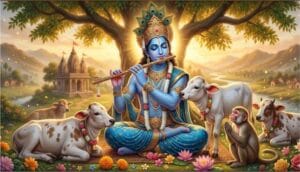
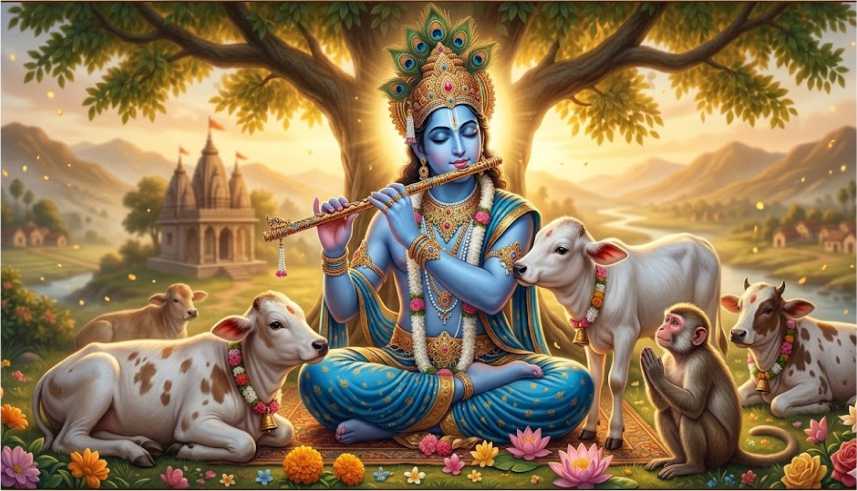
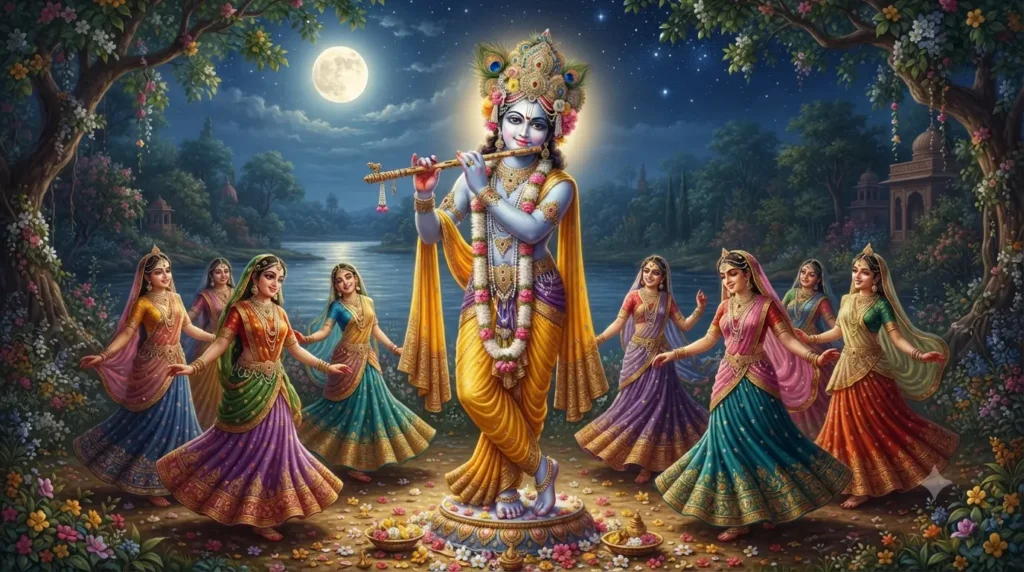
It was a beautiful full moon night during the autumn season. The forest of Vrindavan was illuminated by the bright moonlight, and the blooming water lilies added to the enchanting atmosphere. At that very moment, Shri Krishna began playing His melodious flute.
Hearing the sound of the flute, the hearts of the Gopis of Braj became drawn towards Shri Krishna. They left their homes and daily activities and began making their way towards Him.
The Shrimad Bhagavata presents this episode in a deeply spiritual context. The Gopis’ journey towards Krishna symbolizes their profound love and complete surrender to the Lord.
Shri Krishna Asked the Gopis to Return Home
When the Gopis arrived before Shri Krishna, He did not immediately begin the Raas Leela. Instead, He asked them why they had come into the forest at that late hour of the night.
Shri Krishna advised them to return to their homes and fulfil their family responsibilities. Explaining the importance of Dharma and social duties, He told them that simply coming to Him was not the only way to attain the Lord. Listening to accounts of Him, meditating upon His divine form, and remembering His glories were also ways of connecting with God.
The Gopis were saddened by Krishna’s words. They expressed their feelings before Him. For them, Shri Krishna was the dearest of all. They had left behind their worldly attachments and come seeking refuge in the Lord.
Seeing their devotion and exclusive love, Shri Krishna accepted their desire and engaged in a divine pastime with them.
The Beginning of Raas Leela
Following this, the Raas Leela began in Vrindavan.
According to the Shrimad Bhagavata, the Gopis arranged themselves in a circular formation, with Shri Krishna present among them. Through His Yogamaya, the Lord manifested Himself in numerous forms.
As a result, each Gopi experienced that Shri Krishna was dancing exclusively with her.
The Gopis began dancing and singing with Shri Krishna in the Raas Mandala. The sounds of their bangles, anklets, and waist bells filled the entire atmosphere. The celestial beings and their wives also witnessed this extraordinary divine pastime from the heavens, and the scriptures describe a shower of flowers from the gods.
In particular, Chapter 10.33.3 of the Shrimad Bhagavata explains how Shri Krishna manifested Himself in multiple forms so that every Gopi felt that the Lord was present with her alone.
This is one of the most extraordinary features of Raas Leela.
Shri Krishna’s Manifestation in Multiple Forms During Raas Leela
From an ordinary human perspective, one person cannot be present in multiple places at the same time. However, the Shrimad Bhagavata presents Shri Krishna as the Supreme Lord and the Master of all Yogic Powers.
In the Raas Mandala, the Lord manifested numerous forms of Himself through His divine power. A separate manifestation of Shri Krishna was present with each Gopi.
The spiritual meaning of this episode is understood as follows: God is equally close to every devotee, according to the depth of the devotee’s experience of Him in their heart.
God is one, but His relationship with His devotees can manifest in countless forms.
The Love of the Gopis and the Divine Leela of the Lord
The love of the Gopis in Raas Leela is not understood merely as external attraction. In the Bhagavata tradition, the Gopis are regarded as devotees who were completely devoted to Shri Krishna.
Their minds were entirely absorbed in Krishna. Their devotion was so profound that they valued Krishna’s happiness above their own personal desires.
For this reason, Raas Leela is considered one of the most profound examples of exclusive divine love and complete surrender in the tradition of Bhakti.
Shri Krishna Suddenly Disappears
An important event takes place during the Raas Leela.
As the Gopis enjoyed the presence of Shri Krishna, they began to feel proud of their good fortune. Understanding this feeling within their hearts, Lord Shri Krishna suddenly disappeared from their midst.
According to the Shrimad Bhagavata, the Lord’s disappearance deepened the Gopis’ longing and separation from Krishna.
The Gopis then began searching for Shri Krishna.
They moved through the forest, looking for His footprints. They continued remembering His divine pastimes and discussing Him among themselves.
Even though they could no longer see the Lord before them, their minds became increasingly absorbed in Krishna.
The Gopis’ Experience of Separation from Krishna
Overwhelmed by separation from Shri Krishna, the Gopis became restless with longing. They continued searching for Him while remembering His graceful movements, beautiful smile, flute, and various divine pastimes.
This episode became the foundation for the profound experience of Viraha Bhakti, or devotion through separation, in Indian devotional literature.
Even in Krishna’s absence, He never left the hearts of the Gopis. Instead, their remembrance of Him became even more intense.
Later, Shri Krishna appeared before them again, and the Raas Leela continued.
The Spiritual Meaning of Raas Leela
The most important message of Raas Leela is connected with exclusive love and complete surrender to the Lord.
For the Gopis, Krishna was not simply the object of an ordinary worldly relationship. They regarded Him as the ultimate refuge and the centre of their lives.
Therefore, understanding Raas Leela merely as a story of dance would greatly limit its spiritual significance.
This divine pastime teaches that when the mind becomes completely devoted to God, remembrance of the Lord becomes the centre of a devotee’s life.
The Lord’s disappearance and subsequent appearance during Raas Leela also reveal a profound aspect of devotion. A devotee experiences bliss in the Lord’s presence, while separation makes remembrance of Him even more intense.
Why Is Raas Leela Not Considered an Ordinary Love Story?
The Shrimad Bhagavata itself addresses the questions that may arise after the description of Raas Leela. King Parikshit also wondered how such a pastime between Shri Krishna and the Gopis should be understood.
Shukadeva Ji explained that the position of Lord Shri Krishna is entirely different from that of ordinary living beings. Therefore, imitating the Lord’s divine pastimes or treating them as examples of ordinary worldly behaviour is not appropriate.
This is why Raas Leela is understood in the Bhakti tradition as a divine expression of love and complete surrender to God, rather than an example of an ordinary worldly relationship.
What Is Raas Panchadhyayi?
The main description of Raas Leela is found in Chapters 29 to 33 of the Tenth Canto of the Shrimad Bhagavata Mahapurana. These five chapters are collectively known as Raas Panchadhyayi.
These chapters describe the following events in sequence:
- Shri Krishna playing His flute and the arrival of the Gopis.
- The conversation between Shri Krishna and the Gopis.
- The beginning of Raas Leela.
- Shri Krishna disappearing from among the Gopis.
- The Gopis’ separation from Krishna and their search for Him.
- Shri Krishna appearing before them again.
- The Lord manifesting Himself in multiple forms within the Raas Mandala.
- The divine Raas Leela and its related episodes.
Therefore, anyone wishing to understand the scriptural foundation of Raas Leela should pay special attention to these five chapters of the Tenth Canto.
Spiritual Lessons from Raas Leela
The greatest message of Raas Leela is exclusive love and devotion to God.
The lives of the Gopis help us understand that true devotion means God is no longer someone remembered only during worship. Instead, the Lord becomes the centre of a devotee’s entire life.
This divine story reveals several important spiritual principles:
Exclusive Devotion: A devotee’s mind should become completely absorbed in God.
Complete Surrender: In true love for the Lord, ego and personal selfishness gradually take a back seat.
Remembrance Even in Separation: Even when God is not visibly present, remembrance of Him should never diminish.
Abandonment of Ego: By disappearing from the Gopis, the Lord removed the pride that had arisen within them, revealing that there is no place for ego in true devotion.
The Omnipresence of God: Shri Krishna’s manifestation in multiple forms during Raas Leela demonstrates His divine power.
The Significance of Raas Leela
Raas Leela holds a highly important place in the Vaishnava Bhakti tradition. Among the divine pastimes of Shri Krishna in Vrindavan, it is regarded as the highest expression of love, devotion, separation, and complete surrender.
The episodes associated with Raas Leela have also had a profound influence on Indian devotional literature, music, dance, and art. Various religious and cultural traditions associated with Krishna’s divine pastimes continue to be practised in Vrindavan and the Braj region.
Although different Vaishnava traditions interpret the spiritual significance of Raas Leela according to the teachings of their respective spiritual teachers, its primary scriptural account is found in Chapters 29 to 33 of the Tenth Canto of the Shrimad Bhagavata.
Raas Leela and Devotion to Shri Krishna
Remembering Raas Leela is not limited to listening to or reading a religious story. Its essential message lies in love, remembrance, and complete surrender to Lord Shri Krishna.
Through the description of Raas Leela, the Shrimad Bhagavata reveals that listening to the divine pastimes of the Lord can awaken devotion to Him within a devotee’s heart.
For this reason, Raas Leela is not merely a mythological episode for devotees of Krishna. It is also a means of understanding the deeper emotions and spiritual dimensions of Bhakti.
Frequently Asked Questions About Raas Leela
Where Did Raas Leela Take Place?
According to the Shrimad Bhagavata, Raas Leela took place in the forest region of Vrindavan, near the Yamuna River, as a divine pastime of Lord Shri Krishna.
Which Scripture Describes Raas Leela?
The main and most well-known scriptural account of Raas Leela is found in Chapters 29 to 33 of the Tenth Canto of the Shrimad Bhagavata Mahapurana. These five chapters are known as Raas Panchadhyayi.
How Many Krishnas Were Present During Raas Leela?
According to the Shrimad Bhagavata, Shri Krishna manifested Himself in numerous forms through His divine power and was present with each Gopi individually. As a result, every Gopi felt that the Lord was dancing exclusively with her.
What Does Raas Leela Symbolize?
In the Bhakti tradition, Raas Leela is understood as a divine expression of the Gopis’ exclusive love, complete surrender, and devotion through separation from Lord Shri Krishna.
Should Raas Leela Be Understood as an Ordinary Worldly Love Story?
No. The Shrimad Bhagavata presents Raas Leela as a divine pastime of the Supreme Lord. It should not be understood as an ordinary worldly love story or as an example to imitate in everyday relationships.
What Is Raas Panchadhyayi?
The five chapters from 29 to 33 of the Tenth Canto of the Shrimad Bhagavata are collectively known as Raas Panchadhyayi. These chapters contain the main description of Raas Leela.
Conclusion
Raas Leela is a divine pastime of Shri Krishna in Vrindavan that reveals the profound spiritual emotions of exclusive love, devotion, complete surrender, and separation between the Lord and the Gopis. Its detailed description is found in Chapters 29 to 33 of the Tenth Canto of the Shrimad Bhagavata.
The message of Raas Leela goes far beyond the fact that Shri Krishna danced with the Gopis. Within this divine pastime lies the deeper principle of Bhakti, in which a devotee sets aside ego and personal desires and makes the Lord the centre of life. The Gopis’ separation from Krishna also shows that remembrance of God can remain equally profound, not only in His presence but also during separation.
For this reason, Raas Leela of Shri Krishna is remembered in the Vaishnava Bhakti tradition as one of the most profound divine expressions of love and complete surrender to the Lord.