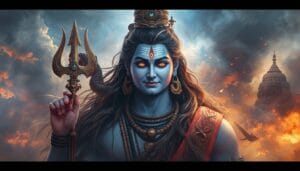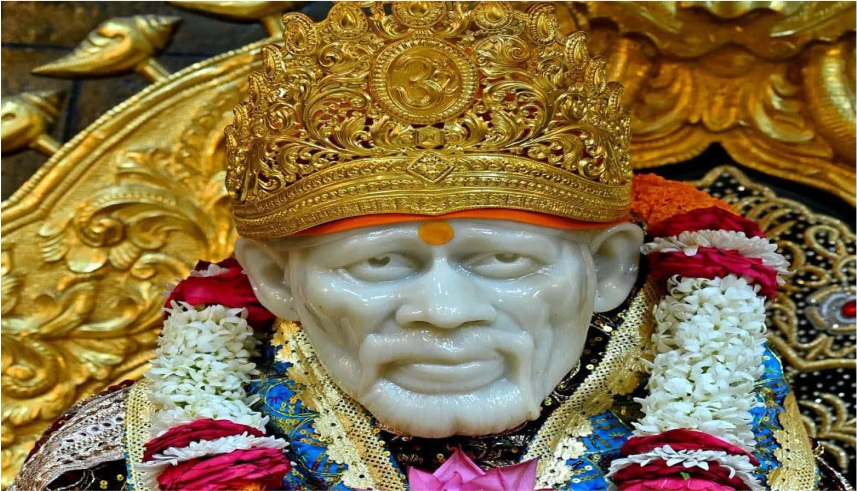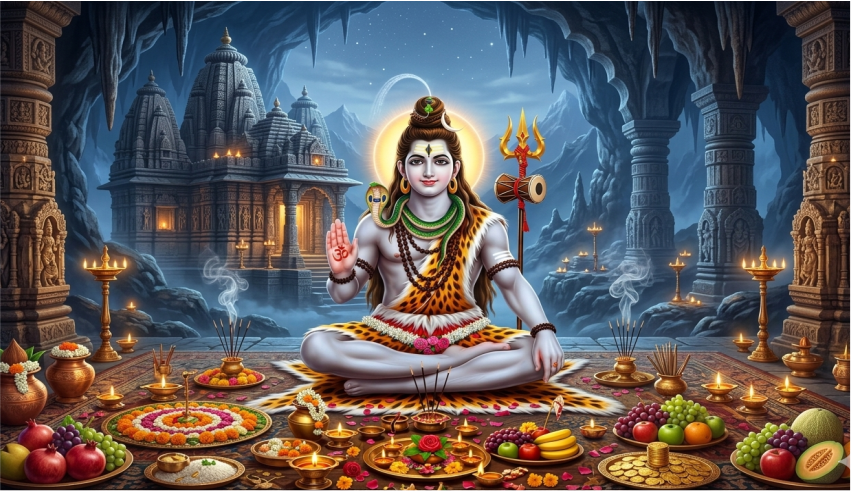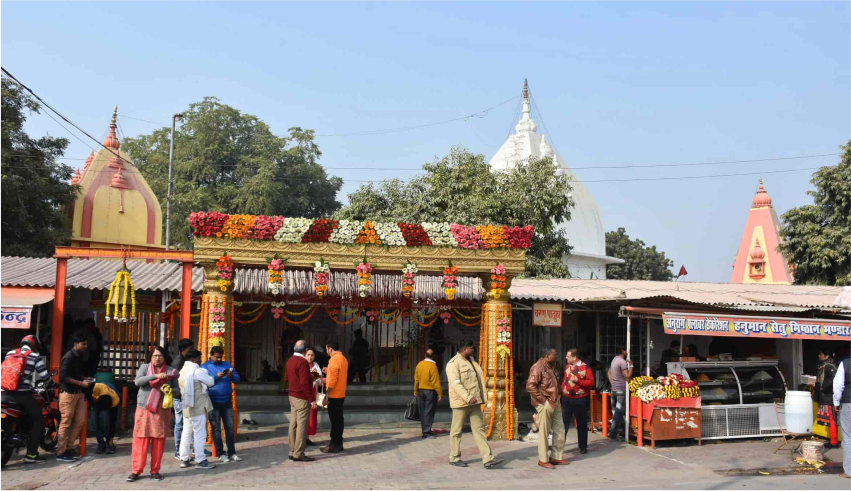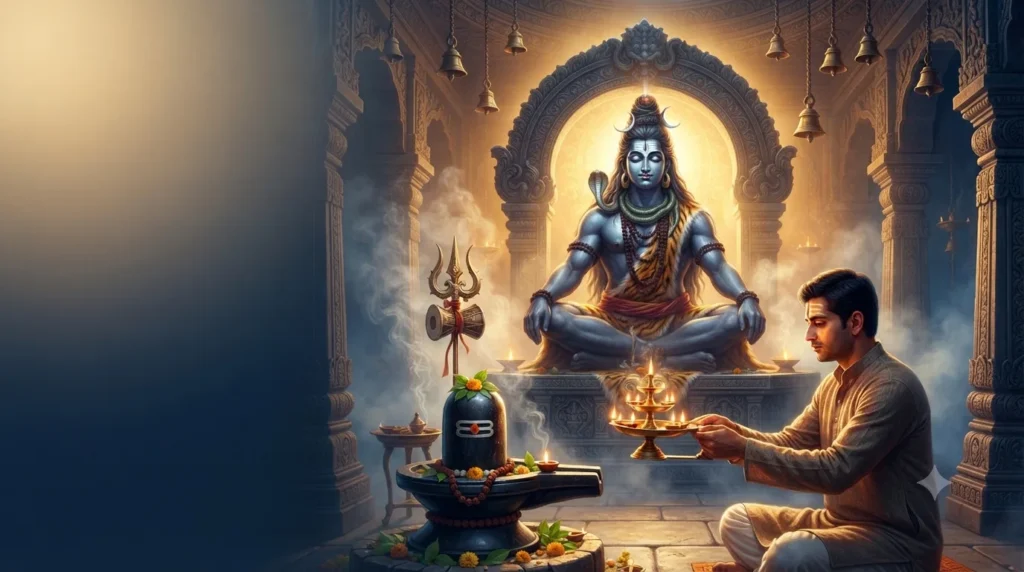
The Aarti of Lord Mahakal is a beautiful way to remember the time-form of Lord Shiva with devotion. “Mrityunjay Mahakal Ki Mangal Aarti” contains a devotional description of Baba Mahakal’s form, his compassion, power, Nandi, Damaru, Tripund, and the glory of Ujjain’s Mahakal.
Here, read the complete text of Mahakal Aarti and simple information related to the Aarti.
॥ Mrityunjay Mahakal Ki Mangal Aarti ॥
Kaal Ki Vikraal Ki, Trilokeshwar Trikaal Ki,
Bhole Shiv Kripal Ki, Karo Re Mangal Aarti,
Mrityunjay Mahakal Ki, Karo Re Mangal Aarti,
Mrityunjay Mahakal Ki, Baba Mahakal Ki,
O Mere Mahakal Ki,
Karo Re Mangal Aarti, Mrityunjay Mahakal Ki.॥
Peet Pushp Baghambar Dhari, Nandi Teri Sawari,
Tripunddhari He Tripurari, Bhole Bhav Bhayhari,
Shambhu Din Dayal Ki, Teen Lok Digpal Ki,
Kailashi Shashibhal Ki,
Karo Re Mangal Aarti, Mrityunjay Mahakal Ki.॥
Damaru Baaje Dam Dam Dam, Naache Shankar Bhola,
Bam Bhole Shiv Bambam Bam Bam, Chadha Bhang Ka Gola,
Jai Jai Hriday Vishal Ki, Aashutosh Pratipal Ki,
Naina Dhak Dhak Jwaal Ki,
Karo Re Mangal Aarti, Mrityunjay Mahakal Ki.॥
Aarat Hari Palanhari, Tu Hai Mangalkari,
Mangal Aarti Kare Nar Nari, Paayein Padarath Chaari,
Kaalroop Mahakal Ki, Kripasindhu Mahakal Ki,
Ujjaini Mahakal Ki,
Karo Re Mangal Aarti, Mrityunjay Mahakal Ki.॥
Kaal Ki Vikraal Ki, Trilokeshwar Trikaal Ki,
Bhole Shiv Kripal Ki, Karo Re Mangal Aarti,
Mrityunjay Mahakal Ki, Karo Re Mangal Aarti,
Mrityunjay Mahakal Ki, Baba Mahakal Ki,
O Mere Mahakal Ki,
Karo Re Mangal Aarti, Mrityunjay Mahakal Ki.॥
Significance of Mahakal Aarti
The Mahakal Aarti praises the Mahakal and Mrityunjay forms of Lord Shiva. In the lines of the Aarti, Lord Shiva is remembered by names such as Trilokeshwar, Trikaal, Kripal, Tripurari, Bhavabhayhari, and Aashutosh.
Through the Aarti, devotees express their reverence and surrender to Lord Mahakal.
Which Forms of Lord Shiva Are Described in Mahakal Aarti?
This Aarti mentions many forms and attributes of Lord Shiva, such as:
-
Mahakal
-
Mrityunjay
-
Trilokeshwar
-
Trikaal
-
Tripurari
-
Shambhu
-
Aashutosh
-
Kailashi
-
Kripasindhu
-
Kaalroop
The Aarti also mentions Nandi as Lord Shiva’s vehicle, along with Tripund and Damaru.
When to Perform Mahakal Aarti?
Devotees can recite the Mahakal Aarti according to their faith and convenience. In the worship of Lord Shiva, worship and recitation during Mondays, Shivratri, and the month of Sawan are considered to have special religious significance.
You can perform the Aarti with devotion after the worship of Lord Shiva.
How to Perform Mahakal Aarti?
While performing the Mahakal Aarti, the following sequence can generally be followed:
-
Clean the worship place.
-
Light a lamp before Lord Mahakal or the Shivling.
-
Meditate on Lord Shiva.
-
Recite the Aarti with devotion.
-
Move the lamp during the Aarti.
-
Finally, bow to Lord Mahakal and offer a prayer.
While performing the Aarti, try to keep the mind calm and absorbed in devotion.
Special Features of Lord Shiva Described in Mahakal Aarti
This Aarti describes many beautiful forms of Lord Shiva.
Nandi as the Vehicle
In the Aarti, by saying “Nandi Teri Sawari,” the relationship between Lord Shiva and Nandi is remembered with devotion.
Tripunddhari
The form of Lord Shiva wearing Tripund on his forehead is described in the line “Tripunddhari He Tripurari.”
Damaru
In the Aarti, the sound of Lord Shiva’s Damaru is presented in a devotional manner through the words “Dam Dam Dam.”
Aashutosh
In the Aarti, Lord Shiva is called Aashutosh, meaning the Lord who is quickly pleased with his devotees.
Ujjaini Mahakal
In the final section, “Ujjaini Mahakal” is remembered, which expresses reverence for Baba Mahakal of Ujjain.
Mahakal Aarti on Monday
Monday is a particularly popular day for the worship of Lord Shiva. On this day, devotees worship the Shivling, offer water, chant mantras, and perform the Aarti.
On Monday, you can devotedly recite the Mahakal Aarti after worship.
Mahakal Aarti During Sawan
The month of Sawan is considered special for the devotion of Lord Shiva. During this time, devotees visit Shiva temples, perform worship, and remember Lord Shiva.
Performing the Mahakal Aarti after Shiva worship on the Mondays of Sawan can make the devotional atmosphere of the worship even more beautiful.
Benefits of Performing Mahakal Aarti
From a religious perspective, the Aarti is a medium for expressing reverence, gratitude, and surrender to the Lord.
Regular recitation of the Mahakal Aarti can help devotees:
-
Increase their devotional feeling toward Lord Shiva.
-
Find an opportunity to engage the mind in worship and meditation.
-
Help create a spiritual atmosphere.
-
Get an opportunity to remember and praise Lord Mahakal.
-
Create a religious atmosphere by performing Aarti collectively with the family.
These points should be understood as religious and spiritual beliefs.
Frequently Asked Questions About Mahakal Aarti
Which is the Aarti of Mahakal?
Various Aartis and hymns are prevalent in the worship of Mahakal. This post provides the complete text of “Mrityunjay Mahakal Ki Mangal Aarti.”
When should the Mahakal Aarti be performed?
The Mahakal Aarti can be performed with devotion after the worship of Lord Shiva. On occasions such as Mondays, Shivratri, and Sawan, devotees especially perform Shiva worship.
Can the Mahakal Aarti be performed at home?
Yes, devotees can worship Lord Shiva at their home’s worship place and perform the Aarti with devotion.
Can the Mahakal Aarti be performed on Monday?
Yes, the Mahakal Aarti can be recited after the worship of Lord Shiva on Monday.
By which names is Lord Shiva remembered in the Mahakal Aarti?
In this Aarti, Lord Shiva is praised by names such as Mahakal, Mrityunjay, Trilokeshwar, Trikaal, Tripurari, Shambhu, Aashutosh, Kailashi, Kripasindhu, and Kaalroop.
Conclusion
The Mahakal Aarti is a devotional praise of the Mahakal form of Lord Shiva. “Mrityunjay Mahakal Ki Mangal Aarti” beautifully describes the various forms and glory of Lord Shiva.
Devotees can recite this Aarti with reverence and devotion during the worship of Lord Mahakal.
Har Har Mahadev!
Jai Baba Mahakal!

 Download Free PDF