Shri Ganesh Kavach
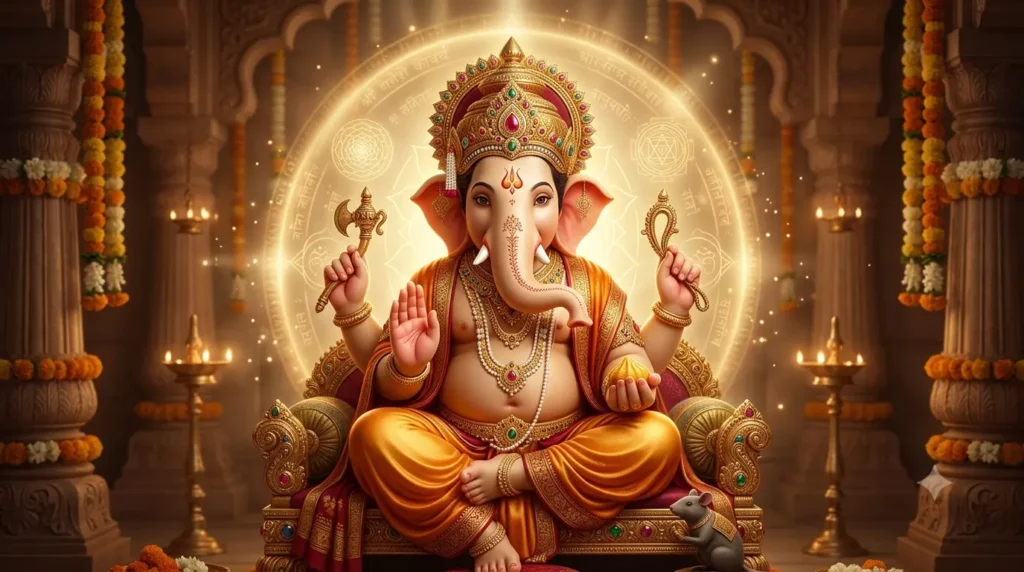
Lord Ganesha is worshipped as the remover of obstacles and the deity of wisdom, intelligence, and auspicious beginnings. Devotees worship Lord Ganesha through various hymns, mantras, and protective prayers. Among these, Shri Ganesh Kavach is regarded as an important devotional hymn in which devotees pray to Lord Ganapati for protection of their body, family, and different aspects of life.
In Ganesh Kavach, devotees remember the different names and forms of Lord Ganesha and pray for the protection of various parts of the body and all directions. The traditional significance and benefits associated with reciting this Kavach are also described in the text.
Below, you will find the complete Sanskrit text of Shri Ganesh Kavach in Easy Roman Sanskrit, along with its simple English meaning, so that devotees can understand not only the verses but also the prayers expressed through them.
Complete Recitation of Shri Ganesh Kavach
Shri Ganeshaya Namah ॥
Gauri Uvacha
Esho’tichapalo Daityan Balye’pi Nashayatyaho. Agre Kim Karma Karteti Na Jane Munisattama ॥ 1 ॥
Simple English Meaning:
Mother Gauri says: O revered sage! This child is extremely playful and has already begun destroying demons during his childhood. I wonder what great deeds He will perform when He grows up.
Daitya Nanavidha Dushtah Sadhudevadruhah Khalah।
Atosya Kanthe Kinchit Tvam Rakshartham Baddhum Arhasi॥ 2 ॥
Simple English Meaning:
There are many kinds of demons who are wicked, hostile towards saints and gods, and evil by nature. Therefore, please tie a protective Kavach around His neck to safeguard Him.
Munir Uvacha
Dhyayetsimhagatam Vinayakamamum Digbahumadye Yuge Tretayam Tu Mayuravahanamamum Shadbahukam Siddhidam. Dvapare Tu Gajananam Yugabhujam Raktangaragam Vibhum Turye Tu Dvibhujam Sitangaruchiram Sarvarthadam Sarvada ॥ 3 ॥
Simple English Meaning:
The sage says: In Satya Yuga, one should meditate upon Vinayaka seated on a lion and having ten arms. In Treta Yuga, one should meditate upon Ganesha riding a peacock, having six arms, and bestowing spiritual accomplishments. In Dvapara Yuga, one should meditate upon the elephant-faced Lord with four arms and a reddish complexion. In Kali Yuga, one should meditate upon the beautiful, fair-complexioned Lord with two arms, who fulfils all kinds of wishes.
Vinayakah Shikham Patu Paramatma Paratparah. Atisundarakayastu Mastakam Sumahotkatah ॥ 4 ॥
Simple English Meaning:
May Lord Vinayaka, the Supreme Soul and the One beyond all transcendence, protect my crown of hair. May Sumahotkata, whose form is exceedingly beautiful, protect my head.
Lalatam Kashyapah Patu Bhruyugam Tu Mahodarah. Nayane Phalachandrastu Gajasya Tvoshthapallavau ॥ 5 ॥
Simple English Meaning:
May Lord Ganesha in the form of Kashyapa protect my forehead, and may Mahodara protect my two eyebrows. May Phalachandra protect my eyes, and may Gajasya protect my lips.
Jihvam Patu Ganakridash Chibukam Girijasutah. Vacham Vinayakah Patu Dantan Rakshatu Durmukhah ॥ 6 ॥
Simple English Meaning:
May Ganakreeda protect my tongue, and may Girijasuta protect my chin. May Vinayaka protect my speech, and may Durmukha protect my teeth.
Shravanau Pashapanistu Nasikam Chintitarthadah. Ganeshas Tu Mukham Kantham Patu Devo Gananjayah ॥ 7 ॥
Simple English Meaning:
May the Lord who holds a noose in His hand protect my ears, and may Chintitarthada protect my nose. May Lord Ganesha protect my face, and may Lord Ganan Jaya protect my throat.
Skandhau Patu Gajaskandhah Stanau Vighnavinashanah. Hridayam Gananathastu Herambo Jatharam Mahan ॥ 8 ॥
Simple English Meaning:
May Gajaskandha protect my shoulders, and may Vighnavinashana protect my chest. May Gananatha protect my heart, and may the great Lord Heramba protect my abdomen.
Dharadharah Patu Parshvau Prishtham Vighnaharah Shubhah. Lingam Guhyam Sada Patu Vakratundo Mahabalah ॥ 9 ॥
Simple English Meaning:
May Dharadhara protect both sides of my body, and may the auspicious Vighnahara protect my back. May the mighty Vakratunda always protect my private parts.
Ganakrido Janujanghe Uru Mangalamoortiman. Ekadanto Mahabuddhih Padau Gulphau Sada’vatu ॥ 10 ॥
Simple English Meaning:
May Ganakreeda protect my knees and lower legs, and may Mangalamoorti protect my thighs. May the wise and mighty Ekadanta always protect my feet and ankles.
Kshipraprasadano Bahu Pani Ashaprapurakah. Angulishcha Nakhan Patu Padmahasto’rinashanah ॥ 11 ॥
Simple English Meaning:
May Kshipraprasadana protect my arms, and may Ashaprapuraka protect my hands. May Padmahasta, the destroyer of enemies, protect my fingers and nails.
Sarvangani Mayuresho Vishvavyapi Sada’vatu. Anuktamapi Yat Sthanam Dhumraketuh Sada’vatu ॥ 12 ॥
Simple English Meaning:
May Mayuresha protect all parts of my body, and may the all-pervading Lord Ganesha always safeguard me. May Dhumraketu protect every part of my body that has not been specifically mentioned.
Amodas Tvagratah Patu Pramodah Prishthato’vatu. Prachyam Rakshatu Buddhisha Agneyyam Siddhidayakah ॥ 13 ॥
Simple English Meaning:
May Amoda protect me from the front, and may Pramoda protect me from behind. May Buddhisha protect me from the eastern direction, and may Siddhidayaka protect me from the southeast.
Dakshinasyaam Umaputro Nairrityam Tu Ganesvarah।
Pratichyam Vighnaharta Avyad Vayavyam Gajakarnakah॥ 14 ॥
Simple English Meaning:
May Umaputra protect me from the south, and may Ganesvara protect me from the southwest. May Vighnaharta protect me from the west, and may Gajakarnaka protect me from the northwest.
Kauberyam Nidhipah Payadishanyam Ishanandanah. Diva’vyad Ekadantastu Ratrau Sandhyasu Vighnahrit ॥ 15 ॥
Simple English Meaning:
May Nidhipa protect me from the northern direction, and may Ishanandana protect me from the northeast. May Ekadanta protect me during the day, and may Vighnahrit protect me at night and during the twilight hours.
Rakshasasura Betala Graha Bhuta Pishachatah. Pashankushadharah Patu Rajah Sattva Tamah Smritih ॥ 16 ॥
Simple English Meaning:
May Lord Ganesha, who holds a noose and a goad, protect me from Rakshasas, Asuras, Vetalas, planetary afflictions, spirits, and evil entities. May He also safeguard my memory from the disturbances associated with Rajas, Sattva, and Tamas.
Gyanam Dharmam Cha Lakshmim Cha Lajjam Kirtim Tatha Kulam. Vapur Dhanam Cha Dhanyam Cha Grihan Daran Sutan Sakhin ॥ 17 ॥
Simple English Meaning:
May Lord Ganesha protect my knowledge, Dharma, prosperity, modesty, reputation, and family lineage. May He also protect my body, wealth, food grains, home, wife, children, and friends.
Sarvayudhadharah Pautran Mayuresho’vatat Sada. Kapilo’javikam Patu Gajashvan Vikato’vatu ॥ 18 ॥
Simple English Meaning:
May the Lord who holds all kinds of weapons protect my grandchildren, and may Mayuresha always safeguard me. May Kapila protect my goats and other livestock, and may Vikata protect my elephants and horses.
Bhurjapatre Likhitvedam Yah Kanthe Dharayet Sudhih. Na Bhayam Jayate Tasya Yaksha Rakshah Pishachatah ॥ 19 ॥
Simple English Meaning:
According to the traditional belief associated with this Kavach, a wise person who writes it on birch bark and wears it around the neck is freed from fear of Yakshas, Rakshasas, and Pishachas.
Trisandhyam Japate Yastu Vajrasaratanur Bhavet. Yatrakale Pathed Yastu Nirvighnena Phalam Labhet ॥ 20 ॥
Simple English Meaning:
The traditional recitation benefit states that a person who chants this Kavach during all three daily prayer periods develops a body as strong as a thunderbolt. It is also traditionally believed that reciting it before travelling helps one undertake the journey without obstacles.
Yuddhakale Pathed Yastu Vijayam Chapnuyad Dhruvam. Maranocchatana Akarshastambha Mohana Karmani ॥ 21 ॥
Simple English Meaning:
This verse describes the traditional belief that reciting the Kavach during war or difficult circumstances brings victory. It also mentions certain Tantric practices, which should be understood as traditional textual references rather than practical instructions for modern use.
Saptavaram Japed Etad Dinanam Ekavimshatih. Tattatphalam Avapnoti Sadhako Natra Samshayah ॥ 22 ॥
Simple English Meaning:
According to the traditional benefits described in this Kavach, a spiritual practitioner who chants it seven times daily for twenty-one days is believed to receive the results associated with their devotional practice and spiritual resolve.
Ekavimshativaram Cha Pathet Tavad Dinani Yah. Karagrihag atam Sadyo Rajna Vadhyam Cha Mochayet ॥ 23 ॥
Simple English Meaning:
The traditional recitation benefits state that a person who recites this Kavach twenty-one times daily for the prescribed number of days may receive relief from imprisonment or serious difficulties.
Rajadarshanavelayam Pathed Etat Trivarat ah. Sa Rajanam Vasham Neetva Prakritishcha Sabham Jayet ॥ 24 ॥
Simple English Meaning:
According to the traditional benefits described in this verse, reciting this Kavach three times before meeting a king or ruler is believed to bring success in gaining the ruler’s favour and winning over the assembly.
Idam Ganeshakavacham Kashyapena Sameeritam. Mudgalaya Cha Tenatha Mandavyaya Maharshaye ॥ 25 ॥
Simple English Meaning:
This Ganesh Kavach was spoken by Sage Kashyapa and was subsequently narrated by him to Mudgala and the great sage Mandavya, as described in the text.
Mahyam Sa Praha Kripaya Kavacham Sarvasiddhidam. Na Deyam Bhaktiheenaya Deyam Shraddhavate Shubham ॥ 26 ॥
Simple English Meaning:
He graciously revealed this Kavach, which is said to bestow spiritual accomplishments, to me. This sacred teaching should not be given to someone without devotion, but should be shared with a person who has sincere faith and reverence.
Anenasya Krita Raksha Na Badha’sya Bhavet Kvachit. Rakshasasura Betala Daitya Danava Sambhava ॥ 27 ॥
Simple English Meaning:
According to the traditional benefits of this Kavach, a person protected by it is believed to remain free from troubles caused by Rakshasas, Asuras, Vetalas, Daityas, and Danavas.
॥ Iti Shri Ganeshapurane Uttarakhande Balakreelayam Shadasheetitame’dhyaye Shri Ganesh Kavacham Sampoornam ॥
Special Features of Shri Ganesh Kavach
The most beautiful feature of Shri Ganesh Kavach is that it invokes the many names of Lord Ganesha to seek protection for different parts of the body, from the head to the feet. It then remembers the different forms of Lord Ganesha as protectors of the east, west, north, south, and other directions.
In this Kavach, Lord Ganesha is remembered not only as the remover of obstacles but also by several divine names, including Vinayaka, Mahodara, Ekadanta, Vakratunda, Heramba, Mayuresha, Kapila, Vikata, Dhumraketu, and Ganesvara.
For this reason, devotees recite this sacred Kavach with faith and devotion as part of their worship of Lord Ganesha.
When Should You Recite Shri Ganesh Kavach?
This Kavach can be recited during the worship of Lord Ganesha. Devotees traditionally consider Wednesday, Ganesh Chaturthi, Sankashti Chaturthi, and the beginning of any auspicious undertaking suitable occasions to remember Lord Ganesha with devotion.
Before reciting the Kavach, keep the worship area clean, light a lamp in front of an image or idol of Lord Ganesha, and meditate upon Him according to your faith and devotion.
Spiritual Significance of Reciting Ganesh Kavach
The central message of Ganesh Kavach goes beyond seeking physical protection. It is a prayer to Lord Ganesha for the auspicious protection of wisdom, knowledge, Dharma, prosperity, reputation, family, and various aspects of life.
Therefore, while reciting this Kavach, it is important not only to pronounce the words but also to maintain faith, humility, and positive thoughts towards Lord Ganesha.
An Important Note About Shri Ganesh Kavach
Different published versions of Ganesh Kavach contain some textual variations. For example, some editions use the reading “Simhagatam”, while the available PDF from Sanskrit Documents shows a different reading. Similarly, minor differences can be found in certain words and the concluding chapter reference.
Therefore, it is not unusual to find small variations in different books and websites.
The text presented here has been arranged in a consistent format to help readers understand and recite the Kavach more easily.
Traditional Benefits of Shri Ganesh Kavach
The concluding verses of Ganesh Kavach describe its traditional benefits. They express the belief that the grace of Lord Ganesha can protect devotees from different obstacles, help them overcome difficulties during journeys, and provide support during challenging circumstances.
The most important message for devotees is to remember Lord Ganesha with faith and goodwill before beginning any auspicious undertaking in life.
A Simple Mantra of Lord Ganesha
Along with reciting the Kavach, devotees can also chant this simple mantra of Lord Ganesha:
Om Gam Ganapataye Namah.
Chant this mantra with devotion and pray to Lord Ganesha for wisdom, discernment, good understanding, and the removal of obstacles from your life.
Frequently Asked Questions About Shri Ganesh Kavach
What is Shri Ganesh Kavach?
Shri Ganesh Kavach is a protective hymn dedicated to Lord Ganesha. It remembers His different names and forms and offers prayers for protection of the body and various aspects of life.
How many verses are there in Ganesh Kavach?
The commonly circulated version of Shri Ganesh Kavach contains 27 verses.
When should Ganesh Kavach be recited?
It can be recited with devotion during the worship of Lord Ganesha. Devotees particularly recite it on occasions such as Wednesday, Ganesh Chaturthi, and Sankashti Chaturthi.
Can Ganesh Kavach be recited along with its meaning?
Yes. Understanding the meaning while reciting the Kavach helps devotees better appreciate the prayers expressed in the hymn and the different forms of Lord Ganesha.
What is the main significance of Ganesh Kavach?
Its central purpose is to seek the protection and blessings of Lord Ganesha for the body, family, wealth, knowledge, Dharma, journeys, and different aspects of life.
Conclusion
Shri Ganesh Kavach is a beautiful and devotional hymn dedicated to Lord Ganesha. It remembers the many divine names of Ganapati and offers prayers for protection of different parts of the body and all directions.
If you are a devotee of Lord Ganesha, reciting this Kavach not merely with the desire for a particular result but with faith, devotion, and complete surrender to the Lord is a meaningful spiritual practice.
Vakratunda Mahakaya, Suryakoti Samaprabha. Nirvighnam Kuru Me Deva, Shubhakaryeshu Sarvada॥
Ganpati Bappa Morya!
Related Posts
Handpicked Posts for You
Ganpati Ki Seva Mangal Mewa Aarti – Complete Lyrics in Hinglish, Meaning, Significance and Puja Vidhi
Read Ganpati Ki Seva Mangal Mewa Aarti lyrics in Hinglish along with their meaning, religious significance, and complete…