Introduction to Shri Lakshmi Kavach
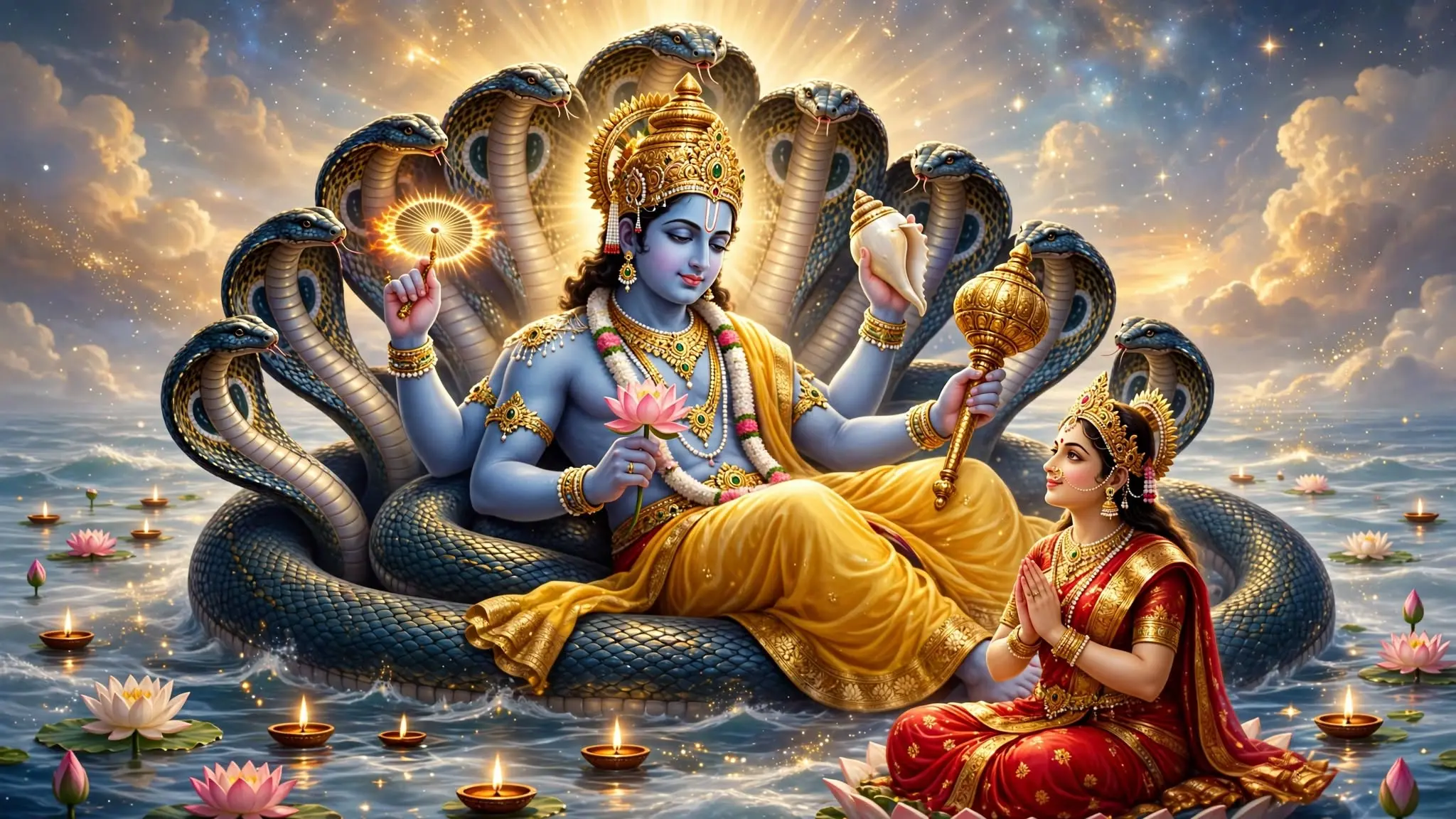
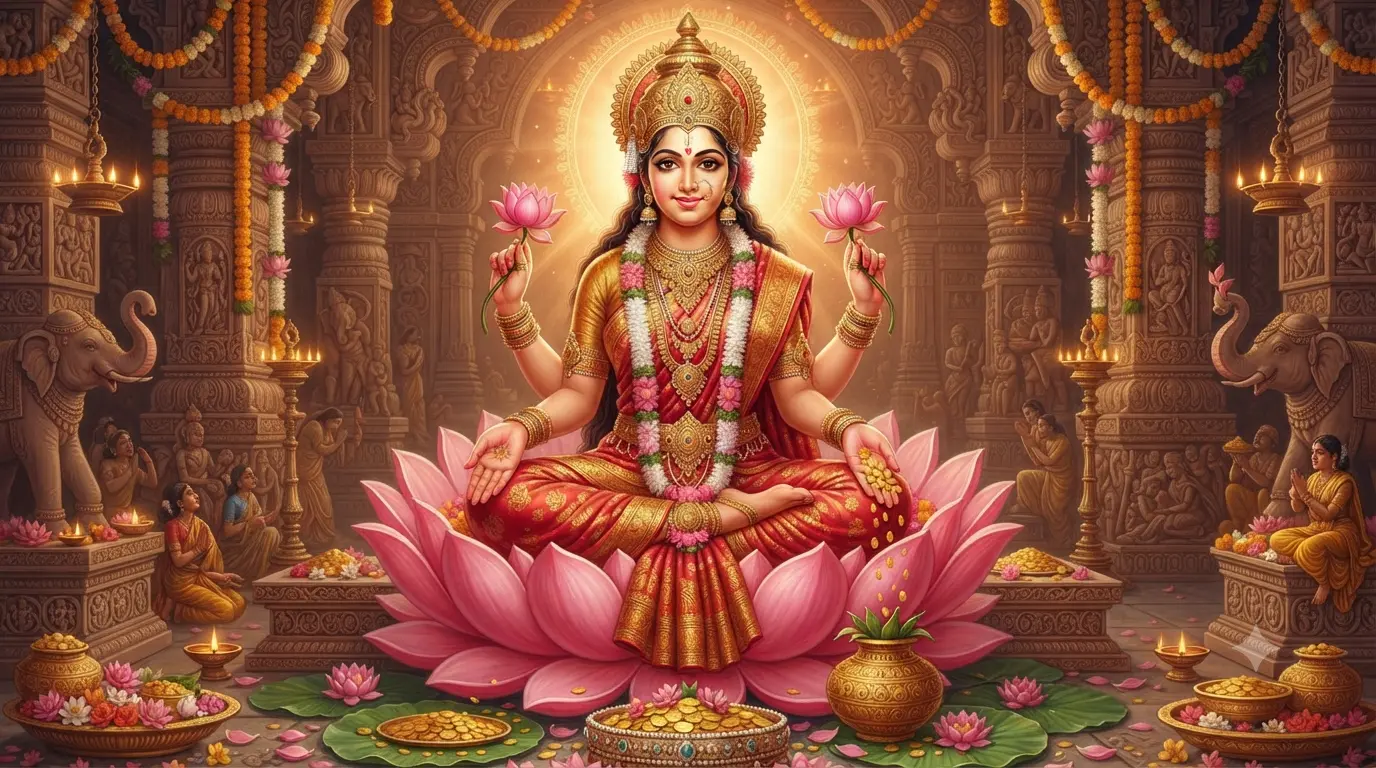
Shri Lakshmi Kavach is an ancient protective prayer associated with the worship of Goddess Lakshmi. It invokes the different forms of Goddess Lakshmi and seeks her protection for various parts of the body. In this Kavach, the Goddess is addressed by several sacred names, including Padma, Haripriya, Kamala, Kamalalaya, Jagatprasu, and Mahalakshmi.
Shri Lakshmi Kavach is described in Chapter 22 of the Ganapatikhanda of the Brahmavaivarta Purana. According to the traditional account, Lord Shri Hari revealed this Kavach to Indra. The introductory verses describe it as a prayer associated with the removal of suffering, the attainment of prosperity and divine opulence, and the destruction of enemies.
In Hindu religious tradition, devotees recite Shri Lakshmi Kavach to seek the blessings of Goddess Lakshmi, along with happiness, prosperity, and abundance. However, the benefits described in its Phalashruti should be understood as traditional religious beliefs expressed in the scripture.
Shri Lakshmi Kavach Recitation
Shrimadhusudana Uvacha:
Grihana Kavacham Shakra, Sarva Duhkha Vinashanam.
Paramaishwarya Janakam, Sarva Shatru Vimardanam.
Brahmane Cha Pura Dattam, Vishtape Cha Jala Plute.
Yad Dhritva Jagatam Shreshthah, Sarvaishwaryayuto Vidhih.
Babhurvur Manavah Sarve, Sarvaishwaryayuto Yatah.
Sarvaishwarya Pradasyasya, Kavachasya Rishir Vidhih.
Panktish Chhandash Cha Sa Devi, Svayam Padmalaya Vara.
Siddhyaishwarya Sukhesveva, Viniyogah Prakirtitah.
Yaddhritva Kavacham Lokah, Sarvatra Vijayi Bhavet.
Original Text of Shri Lakshmi Kavach
Mastakam Patu Me Padma, Kantham Patu Haripriya.
Nasikam Patu Me Lakshmih, Kamala Patu Lochane.
Keshan Keshavakanta Cha, Kapalam Kamalalaya.
Jagatprasur Gandayugmam, Skandham Sampatprada Sada.
Om Shreem Kamalavasinyai Swaha, Prishtham Sadavatu.
Om Hreem Shreem Padmalayai Swaha, Vakshah Sadavatu.
Patu Shrir Mama Kankalam, Bahuyugmam Cha Te Namah.
Om Hreem Shreem Lakshmyai Namah, Padau Patu Me Santatam Chiram.
Om Hreem Shreem Namah Padmayai Swaha, Patu Nitambakam.
Om Shreem Mahalakshmyai Swaha, Sarvangam Patu Me Sada.
Om Hreem Shreem Kleem Mahalakshmyai Swaha, Mam Patu Sarvatah.
Phalashruti
Iti Te Kathitam Vatsa, Sarvasampatkaram Param.
Sarvaishwaryapradam Nama, Kavacham Paramadbhutam.
Gurumabhyarchya Vidhivat, Kavacham Dharayettu Yah.
Kanthe Va Dakshine Bahau, Sa Sarvavijayi Bhavet.
Mahalakshmir Griham Tasya, Na Jahati Kadachana.
Tasya Chhayeva Satatam, Sa Cha Janmani Janmani.
Idam Kavacham Ajnatva, Bhajellakshmim Sumandadhih.
Shatalakshaprajapto’pi, Na Mantrah Siddhidayakah.
॥ Iti Shri Brahmavaivarte Indram Prati Harinopadishtam Lakshmikavacham ॥
Simple English Meaning of Shri Lakshmi Kavach
At the beginning of the Kavach, Lord Shrimadhusudana addresses Indra and asks him to receive this sacred protective prayer. It is described as a Kavach that removes suffering, bestows supreme prosperity and divine opulence, and helps overcome enemies.
The introductory verses state that this Kavach was previously given to Lord Brahma. By wearing it, Brahma became endowed with all forms of prosperity and divine opulence. A similar attainment of prosperity is also described in connection with the Manus. Brahma is identified as the sage of this Kavach, while its metre is Pankti. Goddess Padmalaya herself is its presiding deity.
The subsequent verses invoke different forms and names of Goddess Lakshmi to seek protection for various parts of the body.
In the verse “Mastakam Patu Me Padma,” the devotee prays to Goddess Padma for protection of the head.
In “Kantham Patu Haripriya,” the devotee seeks protection of the throat from Haripriya, the beloved consort of Lord Vishnu.
In “Nasikam Patu Me Lakshmih,” protection of the nose is sought from Goddess Lakshmi, while Goddess Kamala is invoked for the protection of the eyes.
Further, protection of the hair is sought from Keshavakanta, while Kamalalaya is invoked for the protection of the skull. The devotee prays to Jagatprasu for the protection of both cheeks and to Sampatprada for the protection of the shoulders.
The following verses invoke the sacred names and mantras of Goddess Lakshmi while seeking protection for the back, chest, skeletal structure, both arms, feet, hips, and the entire body.
In the final verse, the mantra “Om Hreem Shreem Kleem Mahalakshmyai Swaha” is recited while seeking protection from all directions.
Thus, this Kavach is not limited to prayers for wealth and material prosperity. Through the different forms of Goddess Lakshmi, it expresses a prayer for the protection of the entire body and devotion to the Goddess.
Simple English Meaning of the Phalashruti
In the Phalashruti, Lord Shri Hari describes this Kavach as an extraordinary sacred prayer that bestows all forms of prosperity and divine opulence.
It states that a person who worships their Guru according to the prescribed tradition and then wears this Kavach, either around the neck or on the right arm, becomes victorious in all circumstances.
The following verses describe how Mahalakshmi never leaves the home of such a devotee. Her constant presence is compared to one’s shadow, symbolising the belief that the Goddess remains with her devotee throughout successive lifetimes.
The concluding verses place special emphasis on understanding the Kavach and its prescribed method. They state that without knowing this Kavach, merely worshipping Goddess Lakshmi or repeatedly chanting a mantra, even a hundred thousand times, does not bring the desired mantra-siddhi.
The underlying message is that in religious practice, proper understanding, prescribed methods, devotion, the guidance of a Guru, and adherence to the spiritual tradition are considered more important than merely counting repetitions or following outward rituals.
Religious Significance of Shri Lakshmi Kavach
In the Sanatana tradition, Goddess Lakshmi is worshipped as the deity of wealth, prosperity, good fortune, and abundance. Shri Lakshmi Kavach invokes her through numerous sacred names and seeks her protection for different parts of the body.
One of the distinctive features of this Kavach is that it associates different forms of Goddess Lakshmi with different parts of the body. This makes the recitation more than a simple hymn of praise; it also takes the form of a protective prayer seeking the Goddess’s blessings.
While reciting this Kavach, devotees can chant the verses with a peaceful mind and sincere devotion to Goddess Lakshmi. If a particular mantra or Kavach has been received from a Guru, following the instructions given by the Guru is traditionally considered appropriate.
When to Recite Shri Lakshmi Kavach?
Shri Lakshmi Kavach can be recited during the worship of Goddess Lakshmi. Devotees particularly worship Goddess Lakshmi on occasions such as Lakshmi Puja, Fridays, and Diwali.
However, the original text of this Kavach does not prescribe any single day as mandatory for its recitation. Therefore, it is not necessary to consider it restricted to one particular day.
Maintaining cleanliness, choosing a peaceful environment, and remembering the Goddess with sincere devotion are important while performing the recitation.
Important Things to Remember While Reciting Shri Lakshmi Kavach
Since this Kavach contains Sanskrit mantras and verses, they should be pronounced as accurately as possible during recitation. If there is any uncertainty regarding the pronunciation of a particular word, a reliable Sanskrit text or the guidance of a qualified scholar may be consulted.
Rather than considering this Kavach merely a means of acquiring wealth, it is more appropriate to recite it as an expression of devotion and worship towards Goddess Lakshmi. The benefits described in religious scriptures are associated with faith and tradition and should not be understood as guarantees of specific worldly results.
A Prayer to Goddess Lakshmi
May Goddess Lakshmi bless her devotees with wisdom, peace, contentment, and righteous conduct. May happiness and harmony prevail in every home, and may everyone progress in life through hard work, righteousness, and good deeds.
By the grace of Shri Mahalakshmi, may auspiciousness, well-being, and prosperity dwell in everyone’s life.
॥ Shri Mahalakshmyai Namah ॥
Shri Lakshmi Kavach Phalashruti
The Phalashruti of this Kavach, described in the Brahmavaivarta Purana, associates its recitation with all forms of prosperity and divine opulence. According to religious tradition, reciting this Kavach with sincere devotion is considered an important part of the worship of Goddess Lakshmi.
Therefore, devotees should approach its recitation with faith, humility, and a commitment to righteous actions. The blessings of Goddess Lakshmi are not associated with wealth alone but are also understood in terms of happiness, peace, contentment, wisdom, and auspiciousness in life.
॥ Shri Lakshmi Kavach Sampoorna ॥
Frequently Asked Questions
Q1. What is Shri Lakshmi Kavach?
Shri Lakshmi Kavach is a traditional Sanskrit protective prayer dedicated to Goddess Lakshmi. It invokes her different divine forms and seeks protection for various parts of the body.
Q2. Where is Shri Lakshmi Kavach mentioned?
Shri Lakshmi Kavach is traditionally attributed to the Brahmavaivarta Purana, in its Ganapatikhanda, Chapter 22.
Q3. When should Shri Lakshmi Kavach be recited?
Devotees may recite Shri Lakshmi Kavach during the worship of Goddess Lakshmi, particularly on Fridays, during Lakshmi Puja, and on Diwali. The original text does not prescribe a mandatory day.
Q4. What is the significance of Shri Lakshmi Kavach?
The Kavach expresses devotion to Goddess Lakshmi and seeks her protection, blessings, prosperity, and well-being through the invocation of her different divine names.
Q5. Can Shri Lakshmi Kavach be recited daily?
Devotees may include Shri Lakshmi Kavach in their regular worship according to their faith and tradition. If they follow specific instructions received from a Guru, they should follow that guidance.