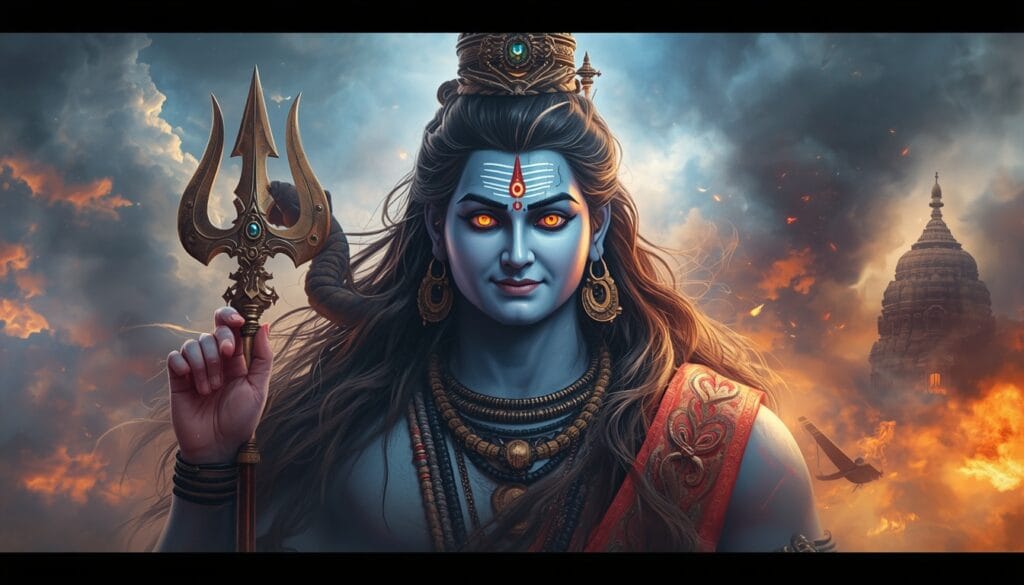
Shri Mahakal Chalisa is a sacred devotional prayer dedicated to Lord Shiva in His divine form as Mahakal. Lord Mahakal, the presiding deity of Ujjain, is worshipped as the supreme master of time and the protector of His devotees. According to religious beliefs, reciting the Mahakal Chalisa with devotion helps devotees overcome fear, negativity and various difficulties in life. Regular recitation is believed to bring mental peace, inner strength, spiritual growth and the blessings of Lord Shiva.
In this article, you will find the complete Shri Mahakal Chalisa in English (Roman), its meaning, PDF information, benefits of recitation, puja vidhi and the divine glory of Lord Mahakal.
Shri Mahakal Chalisa – Complete Lyrics in English
॥ Doha ॥
Shri Mahakal Bhagwan Ki Mahima Aparampaar,
Poori Karte Kaamna Bhakton Ki Kartaar.
Vidya-Buddhi-Tej-Bal-Doodh-Poot-Dhan-Dhaan,
Apne Akshay Kosh Se Bhagwan Karo Pradaan.
॥ Chaupai ॥
Jai Mahakal Kaal Ke Naashak, Jai Trilokpati Moksha Pradaayak.
Mrityunjay Bhavbaadha Haari, Shatrujay Karo Vijay Hamaari.
Aakaash Mein Taarak Lingam, Pataal Mein Haatkeshwaram.
Bhoolok Mein Mahakaleshwaram, Satyam-Shivam Aur Sundaram.
Kshipra Tat Ukhar Shiv Bhoomi, Mahakal Van Paavan Bhoomi.
Aashutosh Bhole Bhandari, Nataraj Baaghambar Dhaari.
Srishti Ko Praarambh Karaate, Kaalchakra Ko Aap Chalaate.
Teerth Avanti Mein Hain Baste, Darshan Karte Sankat Harte.
Vish Peekar Shiv Nirbhay Karte, Neelkanth Mahakal Kahaate.
Mahadev Ye Mahakal Hain, Nirakaar Ka Roop Dhare Hain.
Jyotirmay-Ishaan Adheeshwar, Param Brahma Hain Mahakaleshwar.
Aadi Sanaatan-Swayam Jyotishwar, Mahakal Prabhu Hain Sarveshwar.
Jai Mahakal Maheshwar Jai-Jai, Jai Harsiddhi Maheshwari Jai-Jai.
Shiv Ke Saath Shiva Hai Shakti, Bhakton Ki Hai Raksha Karti.
Jai Nageshwar-Saubhaagyeshwar, Jai Bhole Baba Siddheshwar.
Rinmukteshwar-Swarn Jaleshwar, Aruneshwar Baba Yogeshwar.
Panch-Asht-Dwaadash Lingon Ki, Mahima Sabse Nyaari Inki.
Shrikar Gop Ko Darshan De Taari, Nand Baba Ki Peedhiyan Saari.
Bhakt Chandrasen Raja Sharan Aaye, Vijayi Kara Ripu-Mitra Banaaye.
Daitya Dooshan Bhasm Kiye, Aur Bhakton Se Mahakal Kahaaye.
Dusht Daitya Andhak Jab Aaya, Matrikaon Se Nasht Karaaya.
Jagajjanani Hain Maa Giri Tanaya, Shri Bholeshwar Ne Maan Badhaaya.
Shri Hari Ki Tarjani Se Har-Har, Kshipra Bhi Laaye Gangadhar.
Amritmay Paavan Jal Paaya, ‘Rishi’ Devon Ne Punya Badhaaya.
Namah Shivaya Mantra Panchakshari, Inka Mantra Bada Bhayahaari.
Jiske Jap Se Mitti Saari, Chinta-Klesh-Vipad Sansaari.
Sir Jata-Joot-Tan Bhasm Sajai, Dam-Dam-Damaru Trishool Sajai.
Shamshaan Vihaari Bhootpati, Vishdhar Dhaari Jai Umapati.
Rudraksh Vibhushit Shivshankar, Tripund Vibhushit Pralayankar.
Sarvashaktimaan-Sarv Gunadhaar, Sarvagya-Sarvopari-Jagdishwar.
Anaadi-Anant-Nitya-Nirvikaari, Mahakal Prabhu-Rudra-Avataari.
Dhaata-Vidhaata-Aj-Avinaashi, Mrityu Rakshak Sukharashi.
Tridal-Trinetra-Tripund-Trishooldhar, Trikaay-Trilokpati Mahakaleshwar.
Tridev-Trayi Hain Ekeshwar, Nirakaar Shiv Yogeshwar.
Ekaadash-Praan-Apaan-Vyaan, Udaan-Naag-Kurm-Krikal Samaan.
Devdatt Dhananjay Rahen Prasann, Man Ho Ujjwal Jab Karen Dhyaan.
Aghor-Aashutosh-Jai Audhardaani, Abhishek Priya Shri Vishweshwar Dhyaani.
Kalyaanmaya-Anand Swaroop Shashi Shekhar, Shri Bhole Shankar Jai Mahakaleshwar.
Pratham Poojya Shri Ganesh Hain, Riddhi-Siddhi Sang.
Devon Ke Senapati, Mahaveer Skand.
Annapurna Maa Parvati, Jag Ko Deti Ann.
Mahakal Van Mein Base, Mahakal Ke Sang.
॥ Doha ॥
Shiv Kahen Jag Ram Hain, Ram Kahen Jag Shiv,
Dhanya-Dhanya Maa Sharda, Aisi Hi Do Preet.
Shri Mahakal Chalisa, Prem Se, Nitya Kare Jo Paath,
Kripa Mile Mahakal Ki, Siddh Hoy Sab Kaaj.
Recommended Mahakal Chalisa Book for Devotees
Devotees of Baba Mahakal may keep a copy of the Mahakal Chalisa book and recite it with faith and devotion.
👉 View the Mahakal Chalisa Book on Amazon
Meaning of Shri Mahakal Chalisa in English
Shri Mahakal Chalisa is a devotional composition dedicated to Lord Shiva in His form as Mahakal. It describes the glory of Lord Shiva, His divine forms, His protection of devotees and prayers for peace, happiness and well-being.
Below is a simple English explanation following the original sequence of the Mahakal Chalisa. Wherever a specific mythological reference is unclear, the meaning has been explained according to its general devotional sense rather than presenting an uncertain interpretation as established fact.
Meaning of the Opening Doha
Shri Mahakal Bhagwan Ki Mahima Aparampaar,
Poori Karte Kaamna Bhakton Ki Kartaar.
Vidya-Buddhi-Tej-Bal-Doodh-Poot-Dhan-Dhaan,
Apne Akshay Kosh Se Bhagwan Karo Pradaan.
Meaning: The glory of Lord Mahakal is infinite. He is regarded as the protector and sustainer of His devotees. Through this Doha, devotees pray to Him for knowledge, wisdom, brilliance, strength, children, wealth and prosperity.
Meaning of the Chaupais
Jai Mahakal Kaal Ke Naashak,
Jai Trilokpati Moksha Pradaayak.
Meaning: Victory to Lord Mahakal, who is regarded as the master of time itself. He is the Lord of the three worlds and the divine form of Shiva who grants liberation.
Mrityunjay Bhavbaadha Haari,
Shatrujay Karo Vijay Hamaari.
Meaning: O Lord Mrityunjaya, You remove worldly suffering and difficulties. Bless us with the strength to face challenges and achieve victory in righteous endeavours.
Aakaash Mein Taarak Lingam,
Pataal Mein Haatkeshwaram.
Meaning: These lines mention Taraka Lingam in the heavens and Hatkeshwar in the netherworld. This traditional reference is also mentioned on the tourism page of the Ujjain district administration.
Bhoolok Mein Mahakaleshwaram,
Satyam-Shivam Aur Sundaram.
Meaning: This verse describes the glory of Lord Mahakaleshwar on Earth. The expression Satyam-Shivam-Sundaram represents truth, auspiciousness and divine beauty.
Kshipra Tat Ukhar Shiv Bhoomi,
Mahakal Van Paavan Bhoomi.
Meaning: These lines appear to describe the sacredness of the Kshipra River and Mahakal Van. The exact meaning of the expression “Ukhar Shiv Bhoomi” is unclear, so it would not be appropriate to assign it a definite meaning based on guesswork.
Aashutosh Bhole Bhandari,
Natraj Baaghambar Dhaari.
Meaning: Lord Shiva is known as Ashutosh, meaning the One who is easily pleased. As Bhole Bhandari, He is worshipped with great devotion. In His form as Nataraja, He is the Lord of divine dance. Baghambar-dhari refers to the One who wears a tiger skin.
Srishti Ko Praarambh Karaate,
Kaalchakra Ko Aap Chalaate.
Meaning: Lord Shiva is respectfully remembered as a divine power associated with creation and the cycle of time. These lines express His vast and universal glory in devotional language.
Teerth Avanti Mein Hain Baste,
Darshan Karte Sankat Harte.
Meaning: These lines remember Lord Mahakal, who resides in Avantika, the ancient name of Ujjain. Devotees seek His blessings, peace and strength to face difficulties through His darshan and worship.
Vish Peekar Shiv Nirbhay Karte,
Neelkanth Mahakal Kahaate.
Meaning: According to the mythological story of Samudra Manthan, Lord Shiva consumed the deadly poison to protect the universe. For this reason, He is known as Neelkanth. This verse remembers His sacrifice and His compassionate nature.
Mahadev Ye Mahakal Hain,
Niraakaar Ka Roop Dhare Hain.
Meaning: Lord Mahakal is worshipped as a divine form of Mahadev. Lord Shiva is revered in both manifest and formless forms.
Jyotirmay-Ishaan Adheeshwar,
Param Brahma Hain Mahakaleshwar.
Meaning: Lord Mahakaleshwar is worshipped as the radiant divine Lord, Ishana and the Supreme Reality. These lines praise the supreme and divine nature of Lord Shiva.
Aadi Sanaatan-Swayam Jyotishwar,
Mahakal Prabhu Hain Sarveshwar.
Meaning: Lord Mahakal is remembered as eternal, beginningless and the Lord of the entire universe. The specific reference of the word “Jyotishwar” in this verse is unclear; the general devotional meaning is the eternal glory of Lord Shiva.
Jai Mahakal Maheshwar Jai-Jai,
Jai Harsiddhi Maheshwari Jai-Jai.
Meaning: These lines offer praise to Lord Mahakaleshwar and Goddess Harsiddhi. Both are worshipped with special reverence in the religious traditions of Ujjain.
Shiv Ke Saath Shiva Hai Shakti,
Bhakton Ki Hai Raksha Karti.
Meaning: These lines remember the inseparable relationship between Lord Shiva and Shiva, meaning Goddess Parvati, who represents divine Shakti. Devotees pray to the divine for protection and well-being.
Jai Nageshwar-Saubhaagy eshwar,
Jai Bhole Baba Siddheshwar.
Meaning: This verse praises Lord Shiva through various names and divine forms. A specific connection between all these names in this particular sequence and a single temple or scriptural reference has not been firmly established.
Rinmukteshwar-Swarn Jaleshwar,
Aruneshwar Baba Yogeshwar.
Meaning: These lines praise Lord Shiva through the names Rinmukteshwar, Swarn Jaleshwar, Aruneshwar and Yogeshwar. The specific references intended by these names in this sequence have not been clearly verified.
Panch-Asht-Dwaadash Lingon Ki,
Mahima Sabse Nyaari Inki.
Meaning: This verse appears to refer to the glory of different groups of Shiva Lingas. The exact meaning of “Panch-Asht-Dwaadash” and the specific Lingas being referred to are unclear. Therefore, these lines should not be treated as proof of a particular scriptural list.
Shrikar Gop Ko Darshan De Taari,
Nand Baba Ki Peedhiyan Saari.
Meaning: These lines refer to the deliverance of a devotee named Shrikar through the divine darshan of Lord Shiva and mention the generations of Nand Baba. A devotee named Shrikar appears in a popular story associated with Mahakaleshwar of Ujjain, but the precise connection of the phrase about Nand Baba’s generations is unclear.
Bhakt Chandrasen Raja Sharan Aaye,
Vijayi Kara Ripu-Mitra Banaaye.
Meaning: This verse refers to King Chandrasen and his devotion to Lord Shiva. It expresses the prayer that divine grace may bring victory and help devotees overcome difficulties. The exact narrative meaning of the phrase “Ripu-Mitra Banaaye” is unclear.
Daitya Dooshan Bhasm Kiye,
Aur Bhakton Se Mahakal Kahaye.
Meaning: According to a popular mythological story associated with Mahakaleshwar of Ujjain, Lord Shiva destroyed the demon named Dushana to protect His devotees. This verse remembers Lord Mahakal as the divine protector.
Dusht Daitya Andhak Jab Aaya,
Matrikaon Se Nasht Karaaya.
Meaning: These lines mention the demon Andhaka and the Matrikas. The episode may be connected with the wider Shaiva mythological tradition, but it should not be presented as a specifically verified story of the Mahakaleshwar Temple of Ujjain.
Jagajjanani Hain Maa Giri Tanaya,
Shri Bholeshwar Ne Maan Badhaaya.
Meaning: Goddess Girija, or Goddess Parvati, is praised as the Mother of the Universe and the daughter of the King of the Mountains, Himavan. The specific incident referred to in the second line is unclear; its general meaning is the glory of Shiva and Shakti.
Shri Hari Ki Tarjani Se Har-Har,
Kshipra Bhi Laaye Gangadhar.
Meaning: This verse mentions the index finger of Shri Hari, the Kshipra River and Lord Shiva as Gangadhar. The mythological connection between these events has not been clearly established, so a definite narrative explanation would not be appropriate.
Amritmay Paavan Jal Paaya,
‘Rishi’ Devों Ne Punya Badhaaya.
Meaning: These lines express a devotional feeling associated with sacred water and the spiritual merit of sages or divine beings. The word “Rishi” does not clearly identify any particular person or episode in this verse.
Namah Shivaya Mantra Panchakshari,
Inka Mantra Bada Bhayahaari.
Meaning: “Namah Shivaya” is the well-known Panchakshari Mantra of Lord Shiva. It expresses reverence and surrender to Him. Devotees chant this mantra as part of their spiritual practice and worship.
Jiske Jap Se Mitti Saari,
Chinta-Klesh-Vipad Sansaari.
Meaning: These lines express the devotional belief that chanting the Shiva Mantra brings relief from worries, suffering and worldly difficulties. This should be understood as an expression of faith and spiritual practice rather than a guarantee of a particular result.
Sir Jata-Joot-Tan Bhasm Sajai,
Dam-Dam-Damaru Trishool Sajai.
Meaning: This verse describes Lord Shiva’s matted hair, sacred ash, damaru and trident. These are among the traditional symbols associated with His divine appearance.
Shamshaan Vihaari Bhootpati,
Vishdhar Dhaari Jai Umapati.
Meaning: Lord Shiva is praised as the One who dwells in cremation grounds, the Lord of spirits, the bearer of serpents and the consort of Goddess Uma. These lines describe His divine and ascetic nature.
Rudraksh Vibhushit Shivshankar,
Tripund Vibhushit Pralayankar.
Meaning: Lord Shiva is remembered as Shiv Shankar, adorned with Rudraksha beads and wearing the Tripundra on His forehead. Rudraksha and Tripundra are well-known religious symbols associated with Shiva worship.
Sarvashaktimaan-Sarv Gunadhaar,
Sarvagya-Sarvopari-Jagdishwar.
Meaning: Lord Shiva is praised as all-powerful, the foundation of all virtues, all-knowing and the Supreme Lord of the universe.
Anaadi-Anant-Nitya-Nirvikaari,
Mahakal Prabhu-Rudra-Avataari.
Meaning: Lord Mahakal is remembered as beginningless, infinite, eternal and beyond change. The expression “Rudra-Avataari” is used here as devotional praise and should not be treated as proof of a specific incarnation description.
Dhaata-Vidhaata-Aj-Avinaashi,
Mrityu Rakshak Sukharashi.
Meaning: Lord Shiva is praised as the support and creator of the universe, unborn and imperishable. The expression “Mrityu Rakshak” conveys a prayer for protection from fear and for divine well-being.
Tridal-Trinetra-Tripund-Trishooldhar,
Trikaay-Trilokpati Mahakaleshwar.
Meaning: Tridal may refer to the three-leaved Bilva leaf. Trinetra describes Lord Shiva’s three eyes, while Trishooldhar means the One who holds the trident. Tripundra refers to the three sacred horizontal marks applied to the forehead. The specific meaning of “Trikaay” in this line is unclear. Lord Mahakaleshwar is praised as the Lord of the three worlds.
Tridev-Trayi Hain Ekeshwar,
Niraakaar Shiv Yogeshwar.
Meaning: Through the ideas of the three divine deities and the One Supreme Lord, this verse expresses the devotional understanding of Shiva’s supreme nature. Its precise philosophical meaning is unclear, so it should not be treated as a word-for-word explanation of one specific scriptural doctrine.
Ekaadash-Praan-Apaan-Vyaan,
Udaan-Naag-Kurm-Krikal Samaan.
Meaning: This verse mentions different names associated with the vital energies of the body. In traditional yogic classification, Prana, Apana, Vyana, Udana and Samana are the five principal vital airs. Naga, Kurma, Krikara, Devadatta and Dhananjaya are traditionally listed as the five subsidiary vital airs. The precise intention behind the word “Ekaadash” and the form “Krikal” in this verse is unclear, so its complete meaning cannot be stated with certainty without changing the original text.
Devdatt Dhananjay Rahen Prasann,
Man Ho Ujjwal Jab Karen Dhyaan.
Meaning: Devadatta and Dhananjaya are names found in the traditional classification of the vital airs. The general devotional meaning of this verse is that the mind should become pure, peaceful and radiant during meditation on the Divine.
Aghor-Aashutosh-Jai Audhardaani,
Abhishek Priya Shri Vishweshwar Dhyaani.
Meaning: These lines praise Lord Shiva as Aghora, Ashutosh and the generous giver of blessings. Abhishek is a traditional form of Shiva worship. The verse expresses devotion towards Lord Shiva through worship and meditation.
Kalyaanmaya-Anand Swaroop Shashi Shekhar,
Shri Bholeshankar Jai Mahakaleshwar.
Meaning: Lord Shiva is praised as the embodiment of auspiciousness and bliss, and as Shashishekhar, the One who wears the Moon on His head. The verse concludes with a victory chant to Lord Mahakaleshwar.
Pratham Poojya Shri Ganesh Hain, Riddhi-Siddhi Sang,
Devon Ke Senapati, Mahaveer Skand.
Meaning: The first line remembers Lord Ganesha, worshipped along with Riddhi and Siddhi. The second line praises Lord Skanda, also known as Kartikeya, the commander of the divine army. These two lines describe different divine forms.
Annapurna Maa Parvati, Jag Ko Deti Ann,
Mahakal Van Mein Base, Mahakal Ke Sang.
Meaning: Goddess Parvati is remembered in Her Annapurna form as the Goddess who nourishes the world with food. The specific reference behind the phrase “Mahakal Van Mein Base” is unclear; its general devotional meaning is to remember the glory of the Goddess and Lord Mahakal.
Meaning of the Concluding Doha
Shiv Kahen Jag Ram Hain, Ram Kahen Jag Shiv,
Dhanya-Dhanya Maa Sharada, Aisi Hi Do Preet.
Shri Mahakal Chalisa, Prem Se, Nitya Kare Jo Paath,
Kripa Mile Mahakal Ki, Siddh Hoy Sab Kaaj.
Meaning: This Doha expresses devotion towards both Lord Shiva and Shri Rama and reflects their spiritual connection. Goddess Sharada is praised, along with a prayer for love and harmony. The concluding lines express the belief that those who recite the Mahakal Chalisa daily with love and devotion receive the blessings of Lord Mahakal. The phrase “Siddh Hoy Sab Kaaj” is a devotional prayer for success and well-being, not a guarantee that every worldly wish will certainly be fulfilled.
॥ Thus Ends Shri Mahakaleshwar Chalisa ॥
📚 Recommended Book for Mahakal Devotees
For regular recitation and to learn more about the glory of Lord Shiva, you can explore the following book:
View the Complete Shiv Puran and Mahakal Chalisa Book on Amazon
Shri Mahakal Chalisa – Glory, Puja Vidhi, Significance and Benefits of Lord Mahakal
Introduction to Lord Mahakal
Lord Mahakal is a powerful and divine form of Lord Shiva. He is worshipped as Kaalon Ke Kaal, the One who is beyond time, and as the Supreme Lord of the entire universe. Devotees believe that Mahakal protects His worshippers and provides them with strength, courage and guidance during difficult situations in life.
The most famous temple dedicated to Lord Mahakal is the Mahakaleshwar Jyotirlinga Temple in Ujjain. It is one of the twelve sacred Jyotirlingas of Lord Shiva and an important centre of faith for millions of devotees.
Significance of the Name Mahakal
The word “Mahakal” means the Lord of Time. Everything in the universe is subject to time, but Lord Mahakal is regarded as the One who exists beyond time itself.
This divine form of Lord Shiva reminds devotees that following the path of truth, devotion and righteousness gives them the strength to face fear and difficulties in life.
Mythological Story of Lord Mahakal
According to a popular mythological account, a devoted Brahmin and his sons worshipped Lord Shiva in the city of Ujjain. During that time, a wicked demon began troubling the people. Hearing the prayers of His devotees, Lord Shiva appeared and destroyed the demon.
At the request of His devotees, Lord Shiva manifested in Ujjain as Mahakal. Since then, the worship of Lord Mahakal has held special religious significance.
Significance of Mahakal Chalisa
The Mahakal Chalisa is a devotional way of praising and worshipping Lord Shiva in His form as Mahakal. Devotees recite it with faith and devotion while praying for the blessings of Lord Mahakal.
Reciting the Mahakal Chalisa is considered especially auspicious on:
- Mondays
- The occasion of Maha Shivratri
- The holy month of Sawan
- During Shiva worship
Puja Vidhi of Lord Mahakal
To worship Lord Mahakal, devotees can take a bath in the morning and wear clean clothes.
During the puja:
- Offer water to the idol or Shiva Lingam.
- Offer Bilva leaves, flowers and Akshat (unbroken rice grains).
- Light a diya and incense sticks.
- Chant the sacred mantras of Lord Shiva.
- Recite the Mahakal Chalisa with devotion.
Bhasma, Bilva leaves and water are traditionally considered dear to Lord Shiva.
🪔 Useful Puja Items for Mahakal Worship
Explore useful puja items for worshipping Lord Shiva at home.
View Mahakal Puja Items on Amazon
Mahakal Mantra
Om Namah Shivaya॥
This is one of the most well-known mantras of Lord Shiva. Devotees chant it while praying for the blessings of Lord Shiva and Mahakal.
Mahamrityunjaya Mantra:
Om Tryambakam Yajamahe Sugandhim Pushtivardhanam,
Urvarukamiva Bandhanan Mrityor Mukshiya Maamritat॥
Benefits of Reciting Mahakal Chalisa
According to religious beliefs, worshipping Lord Mahakal may bring the following spiritual benefits:
- It helps bring peace to the mind.
- It may help reduce fear and anxiety.
- It inspires positive thoughts and energy.
- It encourages confidence and courage.
- It strengthens devotion towards Lord Shiva.
- Devotees pray for protection from negative and harmful influences.
Lord Mahakal and Devotion to Lord Shiva
Lord Mahakal is regarded as extremely compassionate towards His devotees. Lord Shiva is also known as Bholenath because He is believed to be pleased by sincere devotion and worship offered with a pure heart.
Devotion to Mahakal inspires a person to develop patience, self-control and spiritual strength in life.
Importance of Mahakal Aarti and Devotion
Through the Aarti and worship of Lord Mahakal, devotees surrender their hearts and minds at the feet of Lord Shiva. The famous Bhasma Aarti performed in Ujjain is regarded as a special form of worship of Lord Mahakal.
This Aarti is an important spiritual experience and a major centre of devotion for visitors and worshippers.
When Should You Recite Mahakal Chalisa?
Reciting the Mahakal Chalisa is considered auspicious on the following occasions:
- Monday
- Pradosh Vrat
- Maha Shivratri
- Sawan Somwar
- During morning and evening worship
Recommended Mahakal Chalisa Book for Devotees
Devotees of Baba Mahakal may keep a copy of the Mahakal Chalisa book and recite it with faith and devotion.
👉 View the Mahakal Chalisa Book on Amazon
Conclusion
Lord Mahakal is a divine and powerful form of Lord Shiva. Devotion to Him inspires courage, peace and positive energy in life. Lord Mahakal is worshipped as the protector of His devotees and the One who helps them face difficult situations.
Remembering Lord Mahakal with faith and devotion brings a sense of spiritual strength, peace and inner happiness.
Jai Shri Mahakal 🔱
Har Har Mahadev 🙏
Frequently Asked Questions About Mahakal Chalisa
What is Mahakal Chalisa?
Mahakal Chalisa is a devotional prayer dedicated to Lord Shiva in His divine form as Mahakal. Devotees recite it with faith and devotion as a form of worship.
When should I recite Mahakal Chalisa?
You can recite the Mahakal Chalisa during morning or evening worship. Devotees also recite it on Mondays, during the month of Sawan and on Maha Shivratri.
How many times should Mahakal Chalisa be recited?
There is no single compulsory number of recitations. Devotees may recite it according to their faith, available time and family or personal worship traditions.
What are the benefits of reciting Mahakal Chalisa?
According to religious beliefs, devotion to Lord Mahakal and recitation of the Chalisa may help bring peace of mind, inner strength and positive thoughts.

 Download Free PDF